- Project Overview
- Events
- PeatZine – the final output
- Stakeholders
- Impact
- Reflections
- Future possibilities
- Annex

Project Overview
PeatZine is a co-created and participatory arts based project that focuses on the history and significance of Calderdale’s moors and peatlands, using a section of the Calderdale Way to capture intangible heritage and prompt creative responses to the landscape and its ecology.
The project team set out to look at the environmental heritage of centuries of farming and industrial practice on the moorlands, to today’s peatland restoration programmes. We used a section of The Calderdale Way that contains moorland, land that has been farmed for centuries and evidence of the impacts of industrialisation as a locus for these themes. We ran a series of workshops and events during Autumn 2025 broadly focused on these themes, using the creative specialisms of the project team. Some events were open to the general public, while others were focused on certain communities.
Once these were completed, we ran a two-day pop up exhibition which exhibited all the outputs from the workshops. This gave participants a chance to see their work displayed in a public setting, and allowed us to engage further with the local community. The zine, published in February 2026, gives the project an afterlife, and encourages further community participation through inviting people to share their responses via our Instagram account.
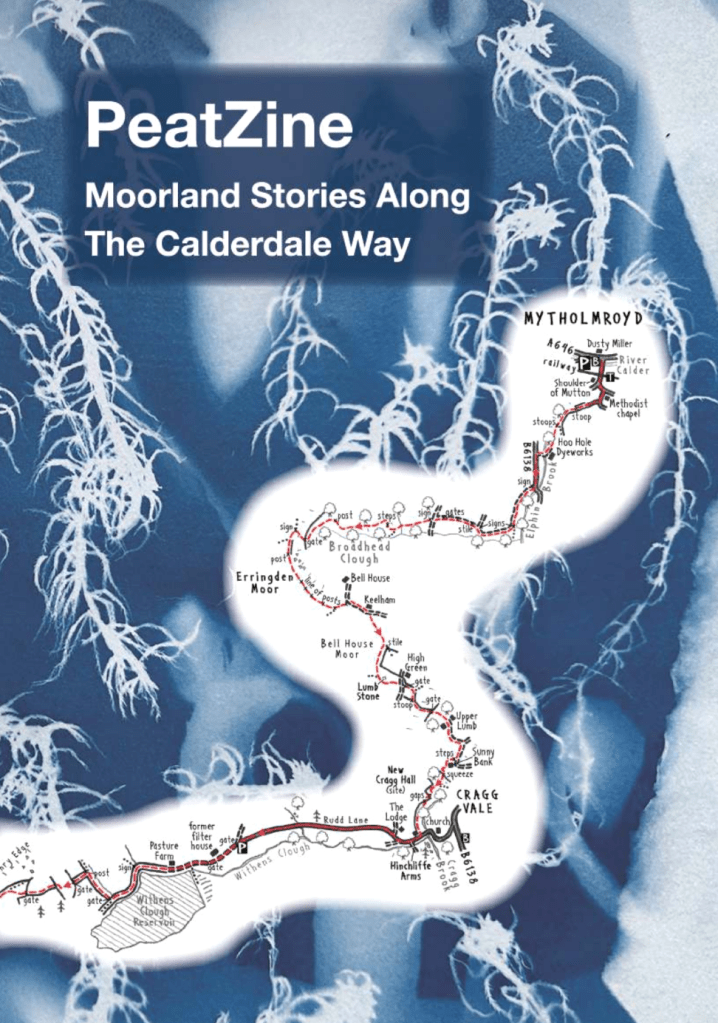
The backbone of the project is the PeatZine trail, which follows a section of The Calderdale Way between Todmorden and Cragg Vale, and crosses through the terrain of the Cragg Vale coiners and Broadhead Clough nature reserve. Because the area we focused on was relatively small and distinct, we could take an inquisitive approach to themes without becoming overwhelmed. The result is a collection of stories and creative responses, based on what our participants created and shared with us, rather than a comprehensive or historical account of the area. Zine readers can follow this route to experience, explore and learn more about the themes that the project encompasses.

Project team
The PeatZine project team consisted of a variety of creative workers based in the Upper Calder Valley, who designed and delivered the workshops and events that underpin the PeatZine project:
- Katie Bates, creative producer / project manager and co-director of Turquoise Arts CIC
- Sheila Tilmouth, visual artist and artist-in-residence for the Calderdale Sphagnum Project
- Jo Kennedy, sound artist
- Paul Knights, history / landscape writer and speaker
- Sally Baker, poet and creative writing teacher
- Melissa Davie from Hey Nature!, illustrator and former soil scientist
- Louise Crosby, illustrator and zine/ comic maker from LDComics
- Chris Goddard, cartographer
- Rowanne Smith, Culturedale Heritage Trainee
Aims
The project set out with three overarching aims:
Environmental understanding
To broaden local knowledge about why moorlands are in their degraded state and the initiatives to rewet/ restore them. To increase awareness and empathy towards sphagnum moss and its role in restoring our peatlands, which is part of Calderdale Council’s Ecological Emergency Plan. To draw attention to the work of Calderdale Council’s Sphagnum Moss Project, which was part of the Growing Resilience initiative.
Engagement with the Calderdale Way
To encourage local people to engage more with The Calderdale Way and attract visitors to the area. To promote responsible and regenerative ways of interacting with the countryside.
Broadening access to local heritage
To create fun, creative, dynamic ways for people to engage with local heritage. To develop partnerships with the local sector with the additional focus on ecology and the arts.
Method
The methods we used to deliver these aims are based on two foundational principles:
- That deep engagement with the landscape can transform people’s relationship to it, by increasing care and empathy. Mindful, creative and learning activities (e.g. workshops and walks) can help deliver this deep engagement.
- Sharing people’s stories and ideas, using their own words and voices, is a way to build empathy and understanding within the local community. Common understanding is necessary in a highly contested landscape like the moorlands, and is essential to building resilient and sustainable communities in the face of climate change and the landscape management changes it necessitates.
These were the guiding principles for how we crafted and ran our workshops and events, and for the “product” (the published zine).
Events
Heritage
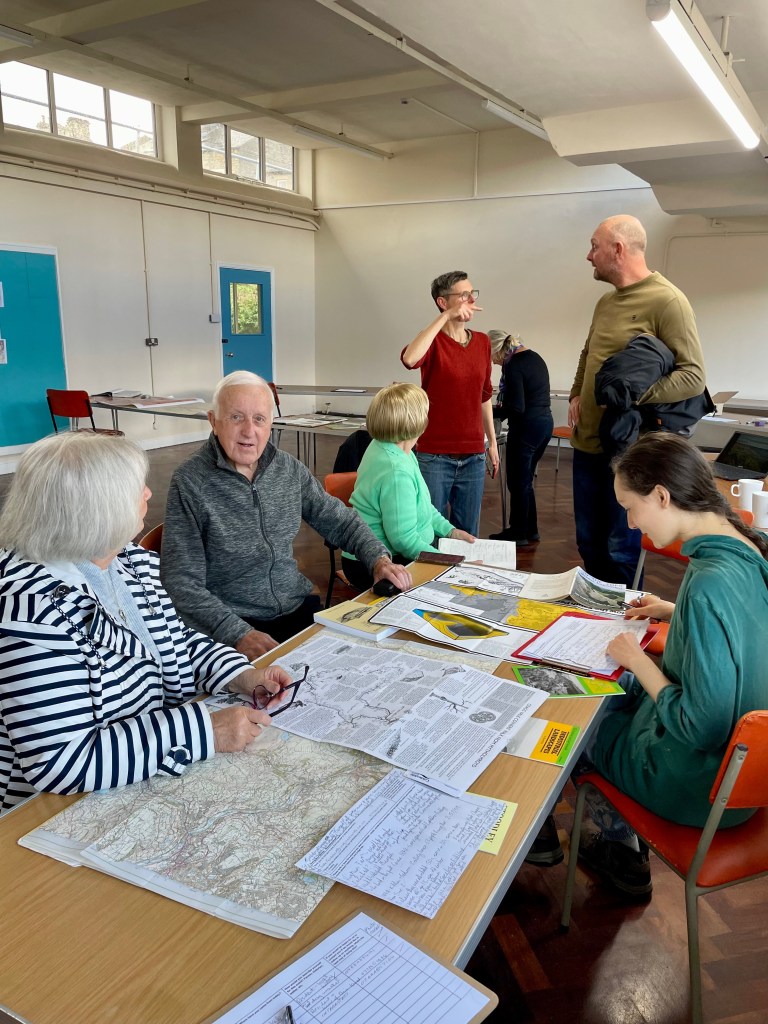
We held two “Story gathering” sessions in Todmorden and Mytholmroyd. These heritage gatherings were advertised through posters, local heritage groups and local history facebook groups and personal contacts. At the events, a variety of historical and environmental material and maps were available for people to peruse. Participants were encouraged to share their stories by talking to our facilitators, being recorded and sharing maps, articles and photographs.
Paul Knights designed and led the sessions, analysed the material and created writing from it. Jo Kennedy created sound recordings of participants and other members of the project team worked as facilitators. One of Culturedale’s heritage trainees, Rowanne Smith, assisted at both events. Paul is locally well known and respected amongst the various groups who attended, which was undoubtedly essential to gathering the audience and depth of material shared with us.
28 people attended these sessions (19 in Todmorden, 9 in Mytholmroyd). A variety of people attended these events: farmers, walkers, historians, naturalists, the moors’ neighbours and lore-keepers.
All the material shared with us was subsequently transcribed and analysed by Paul. Themes were drawn from what people told us, which created the basis for a piece of writing shared at the exhibition (“Moor stories”). This writing also forms the thematic structure of the zine.


Creative writing
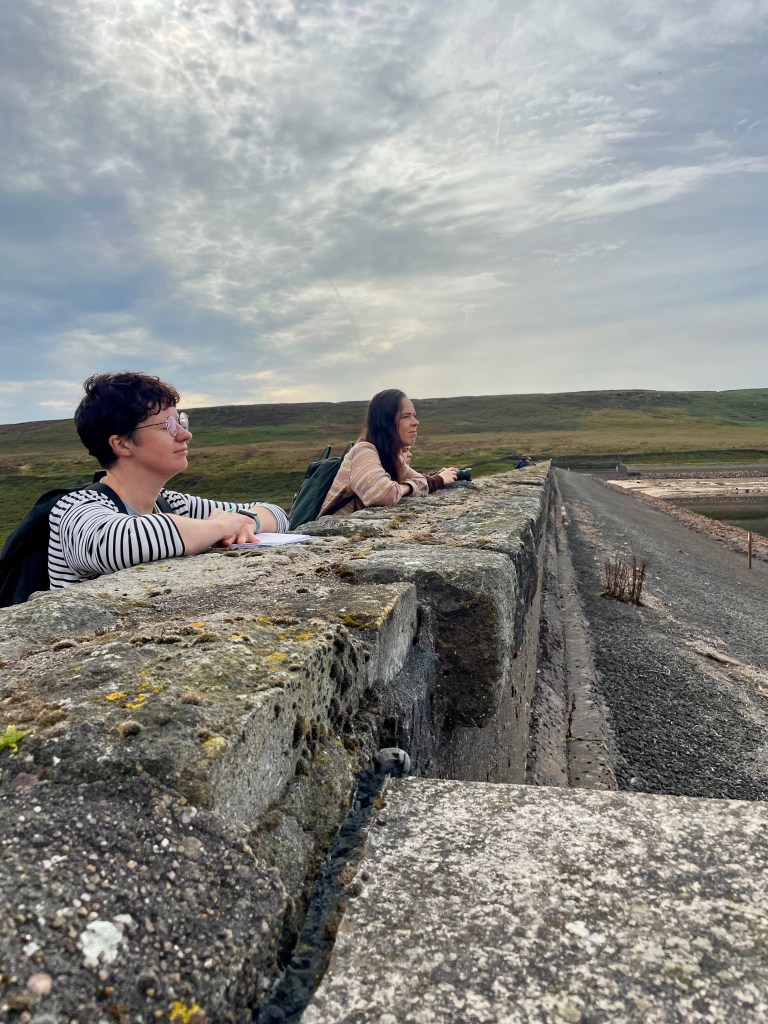
There were two creative writing workshops led by Sally Baker. These began with a mindful walk around Withens Clough reservoir, followed by a workshop at a nearby venue in Cragg Vale. During the workshop, participants experienced sphagnum moss by studying it with magnifying glasses, explored poetry about moorlands and moss, and created their own writing.
Following the workshops, the vast majority of participants contributed poems and writing, which were displayed at the exhibition and published in the zine. It was gratifying that so many people shared their material, which is undoubtedly testament to the safe, sharing, inspirational space that Sally created in the workshops.
Seven people attended the first workshop, and four people attended the second. Eight people had booked onto the second workshop but there were some no-shows.
One participant commented on the benefits of the small group size:
“…the group felt small and intimate. If there were a lot more people I think it would have been inhibiting. Splitting a larger group into several smaller ones each with a leader would work well I think…”
We also created a “Calderdale Peat Glossary” by combining historical, vernacular and participants’ invented words to describe the moorlands. People attending the exhibition also added their own definitions to the glossary.


Sound
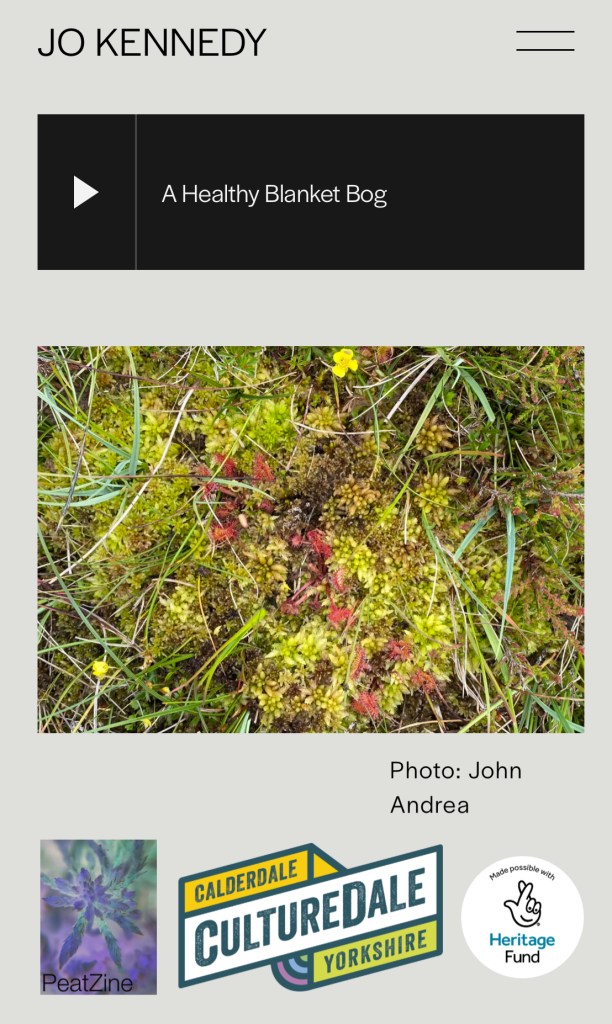
Sound artist Jo Kennedy designed, conducted and recorded two in-depth interviews with Calderdale’s Sphagnum Project Officer, Gill Wrigley, and the National Trust’s Peat Ecologist, Tia Crouch. These interviews explored the formation of blanket bog, reasons for its degradation, and what can be done to restore them. These interviews were then turned into seven sound pieces each around 3 minutes in length, interwoven with ambient field recordings. These were played at the exhibition, and zine readers are invited to interact with them. These sound pieces are the backbone of the project’s educational and expert content, and are highly accessible with their digestible format.
Visual arts and ecology education – adult students
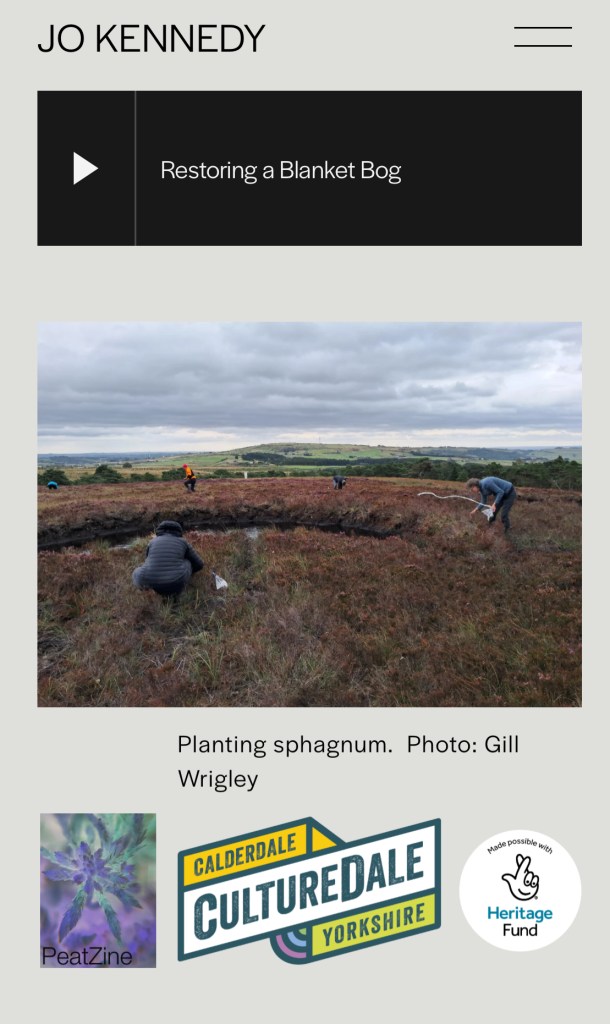
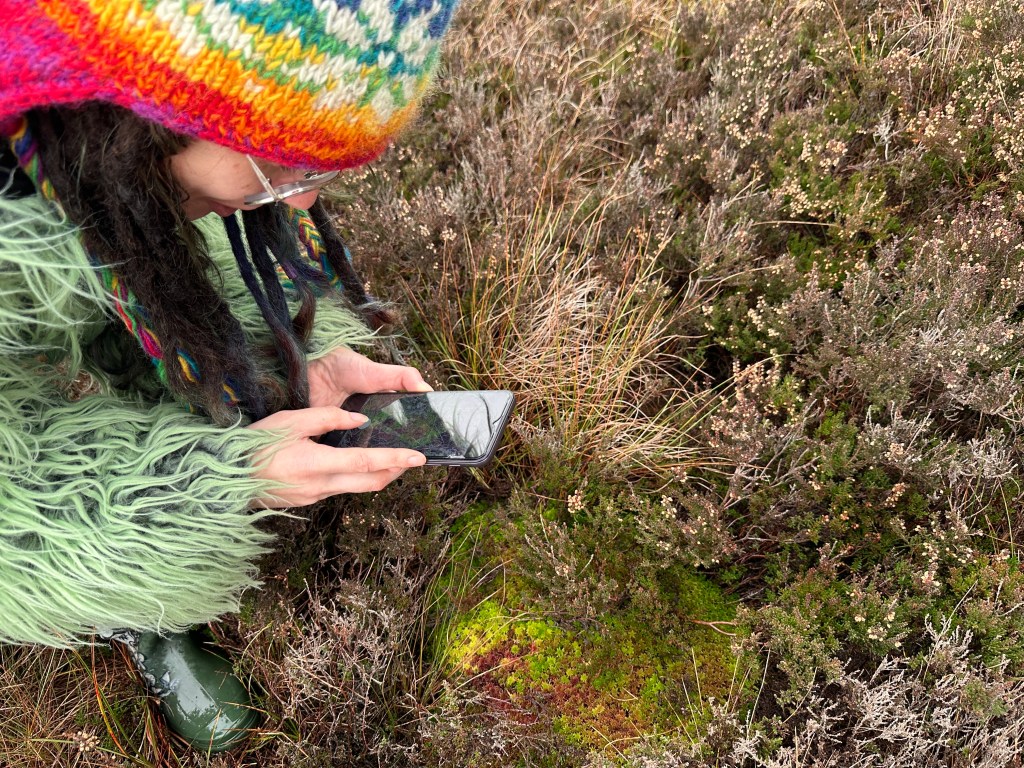
Calderdale College arts access mature students were invited to two workshop days. One was held at Ogden Water Nature Reserve, where Gill Wrigley and Sheila Tilmouth talked about the ecology of moorlands, the practicalities of growing and propagating sphagnum moss and rewetting moorland landscapes. Students were invited to visit the trial rewetting site and plant plugs of sphagnum moss.
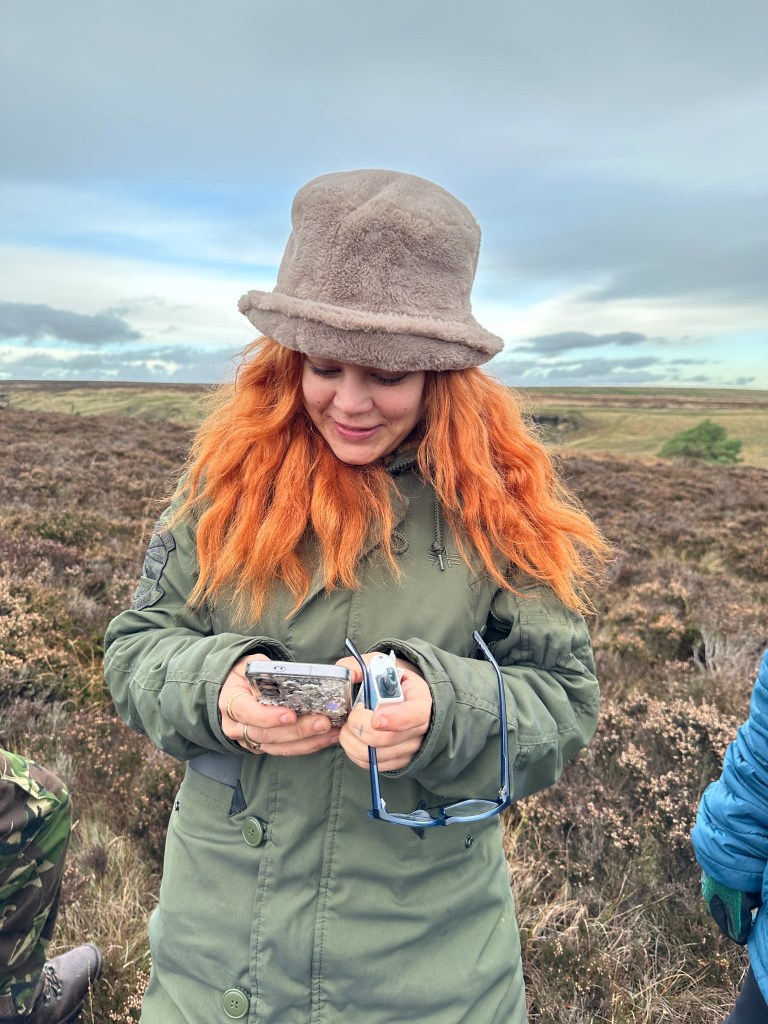
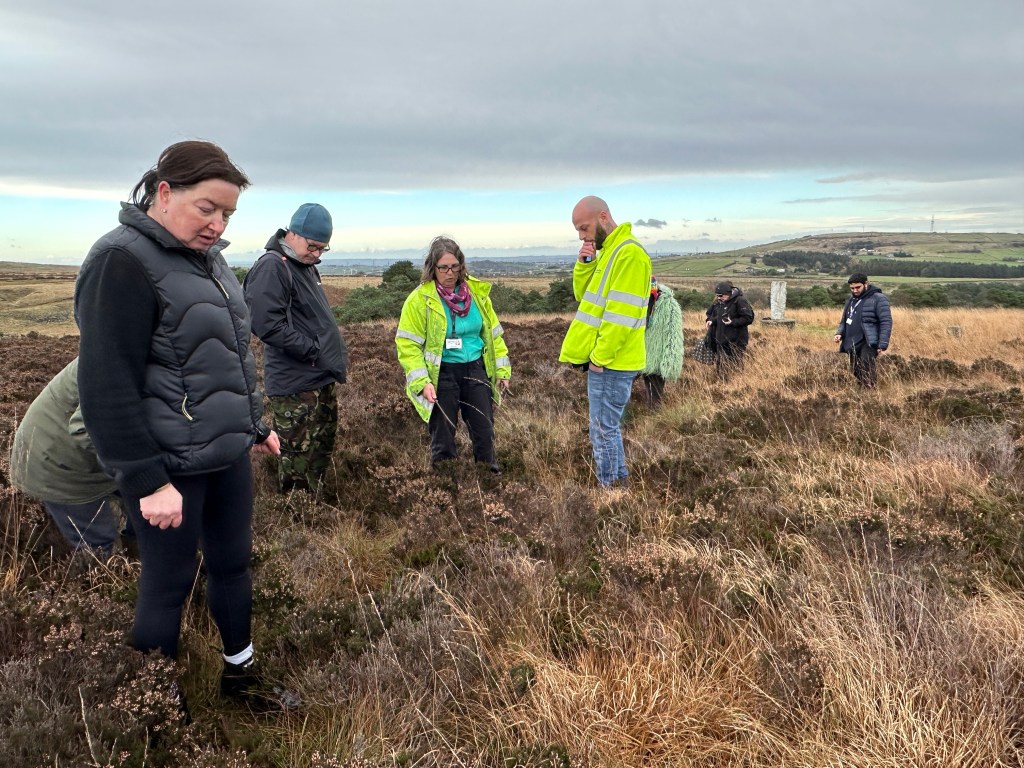
The following week Sheila ran a creative workshop at the college, showing students how to create rust prints and cyanotypes which responded to the subject matter they’d been introduced to the previous week. The artworks created in this workshop were displayed at the exhibition and are used in the zine. This gives art students, right at the beginning of their academic art career, the opportunity to have their work publicly displayed and published.
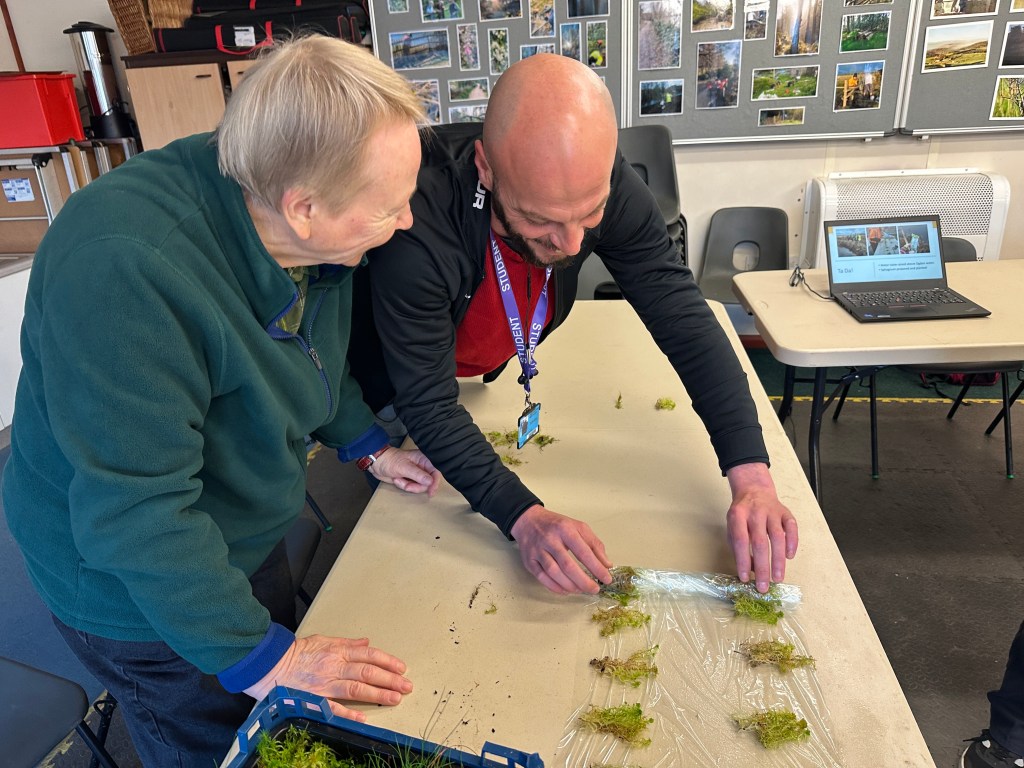
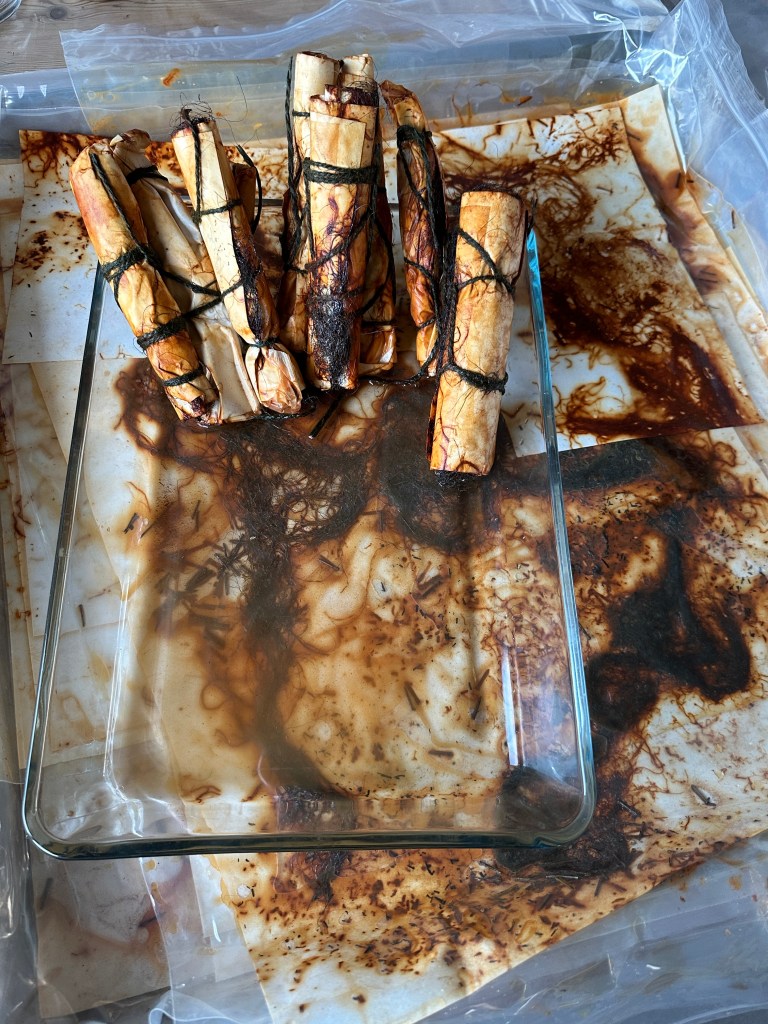
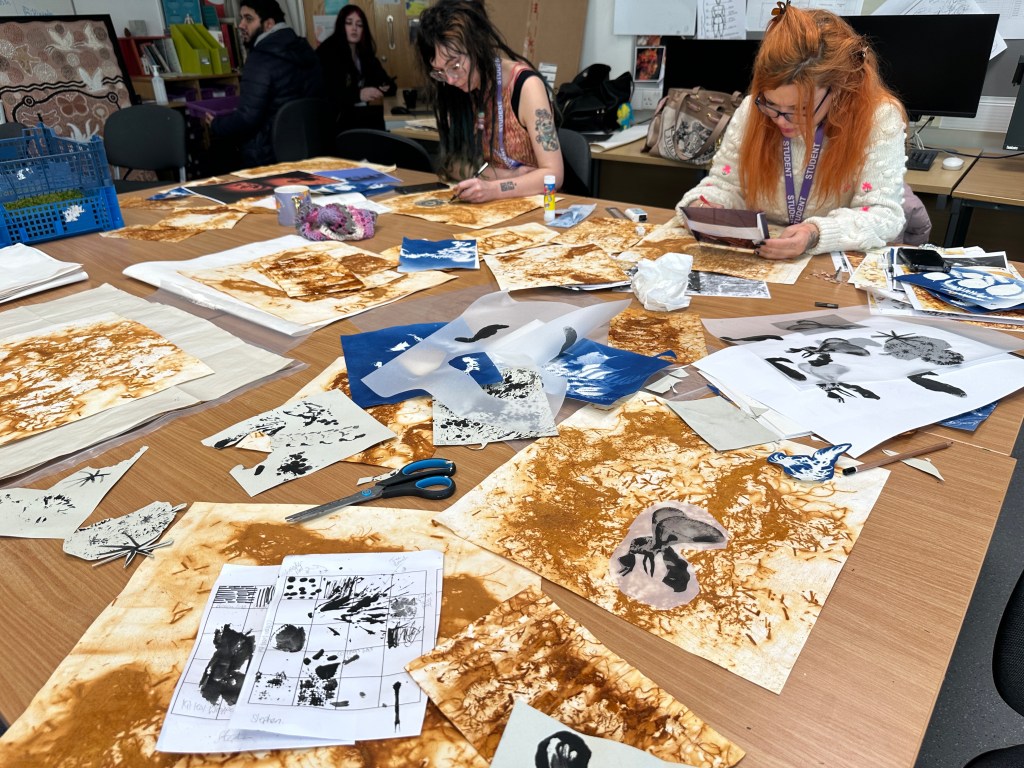
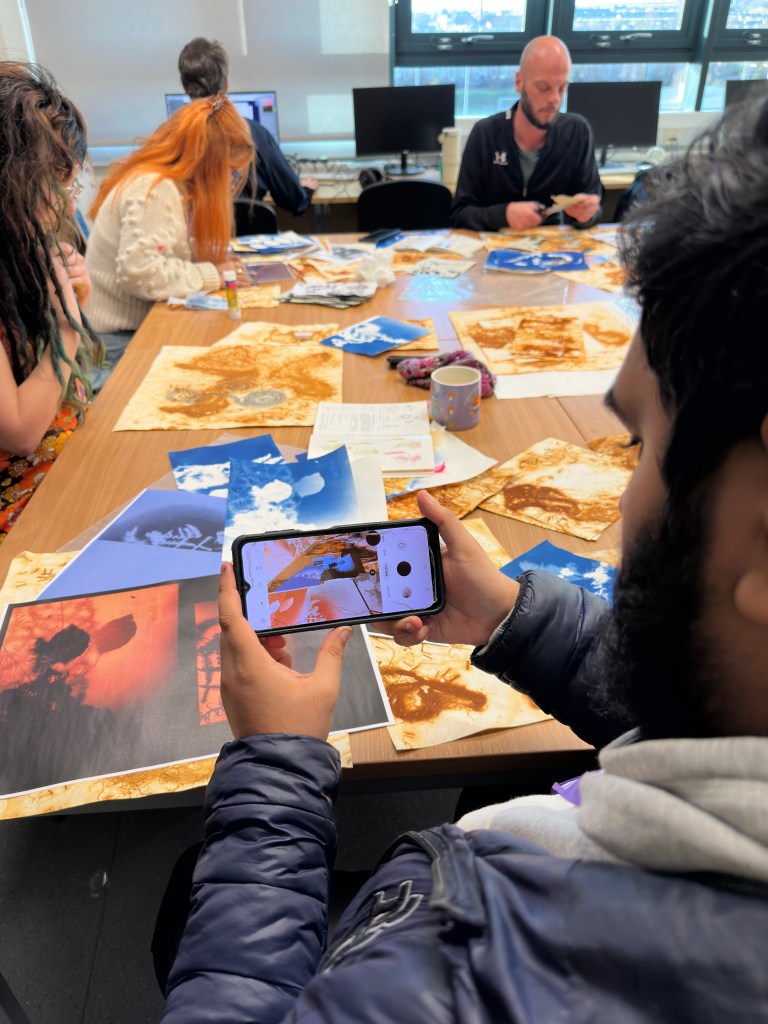
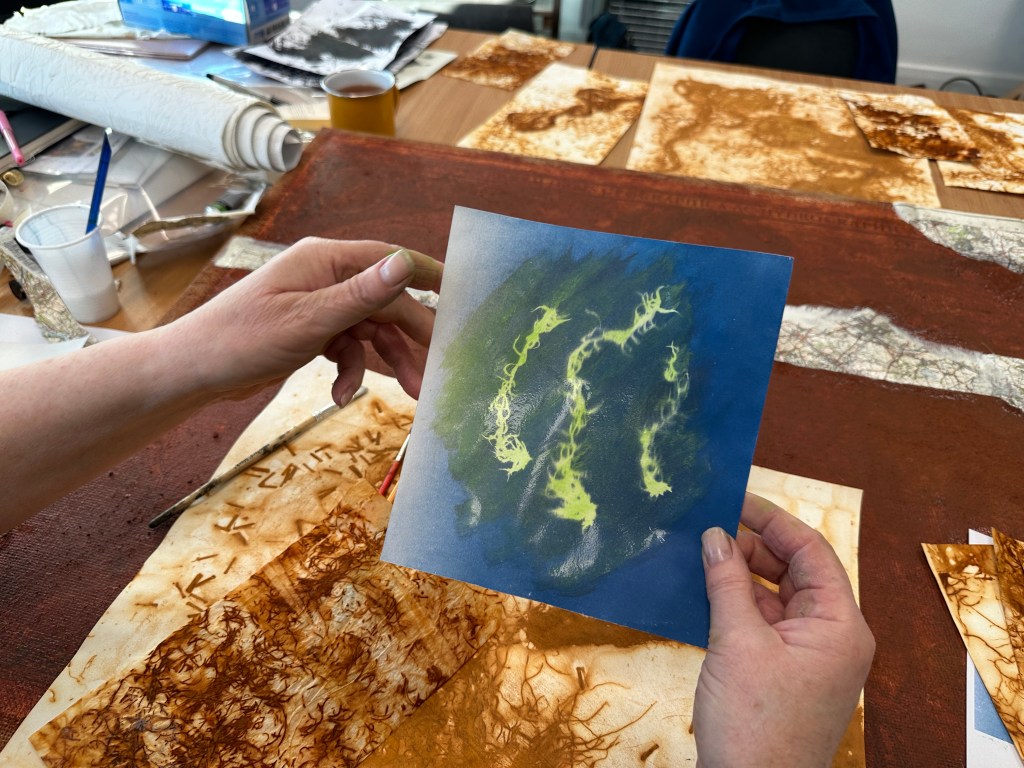
10 students plus their tutor attended the two workshops.
Visual arts and ecology education – cubs
Mytholmroyd Cubs were our youngest participants, with two bespoke sessions delivered for them by Melissa Davie. The first was a nature walk around Heptonstall Moor where the Cubs were introduced to moorland ecology, and given a specially prepared ‘Nature Notebook’ activity booklet to fill out. The Nature Notebook will be published with PeatZine and Melissa will use it for future nature-awareness projects.
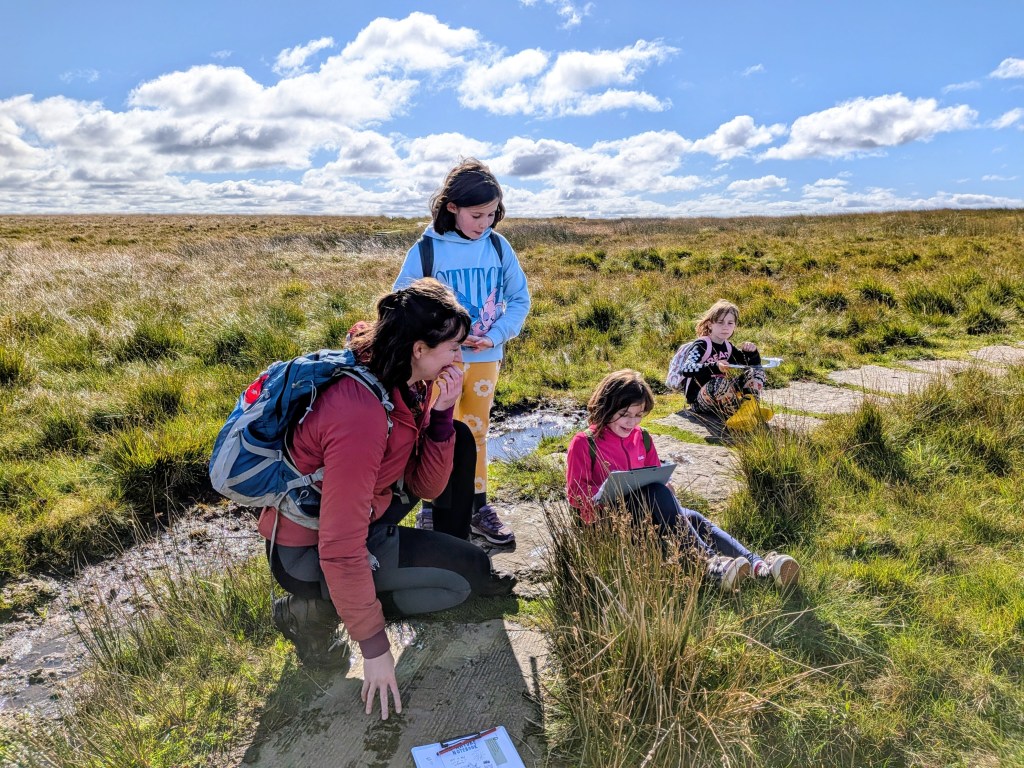
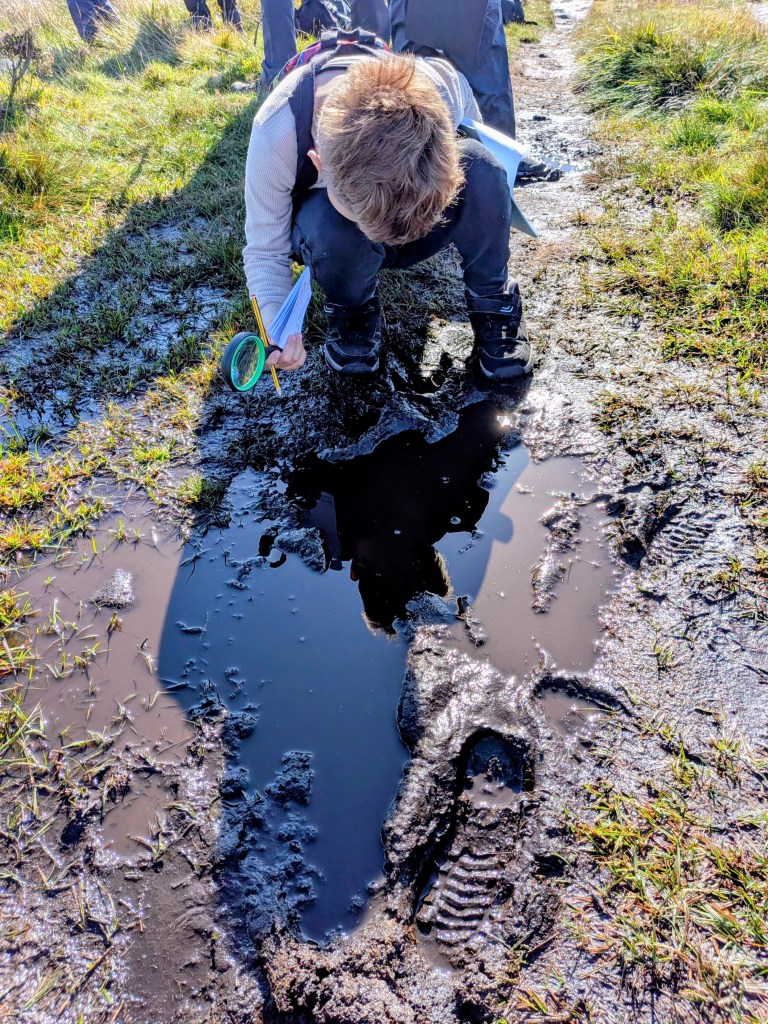
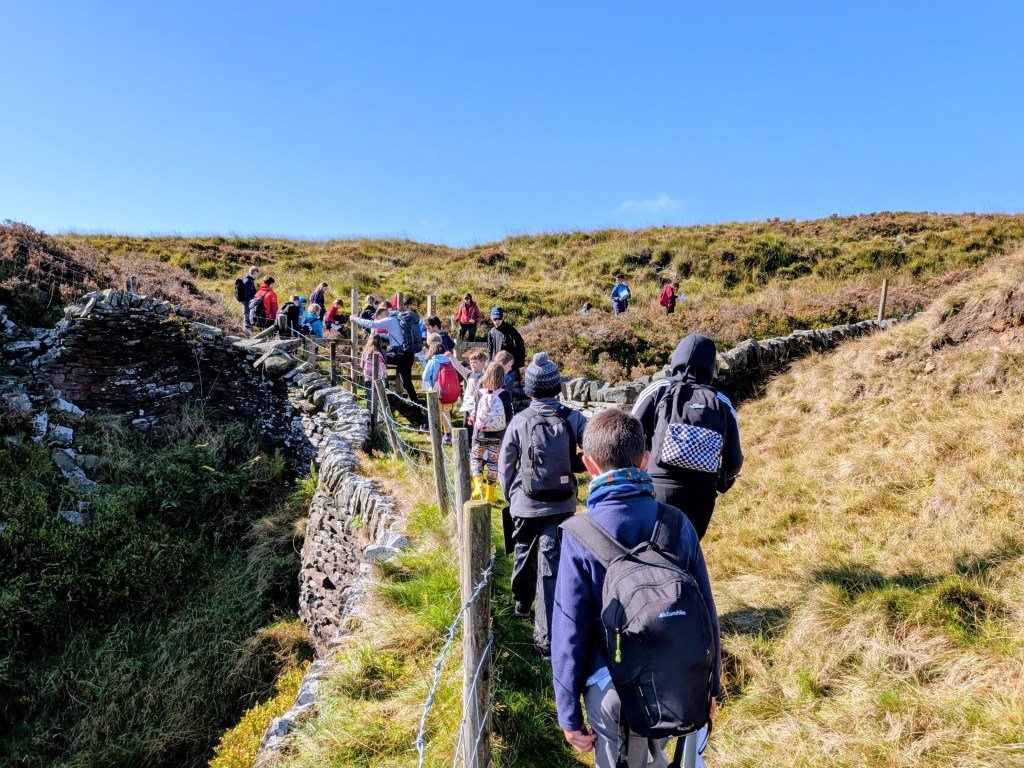
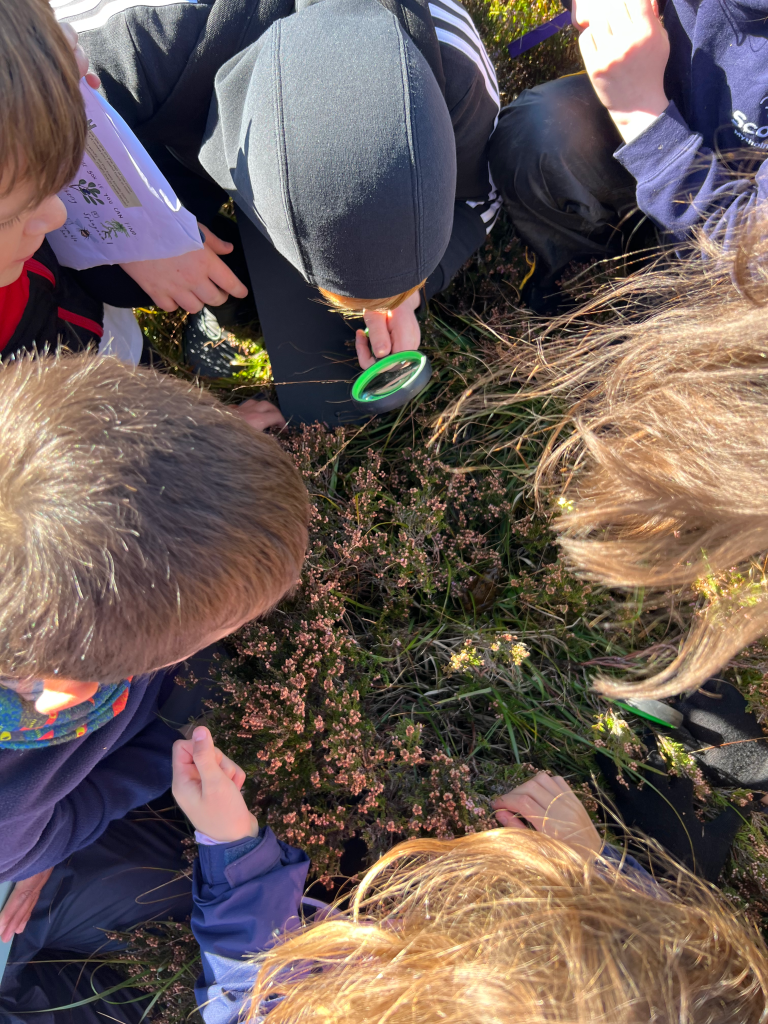
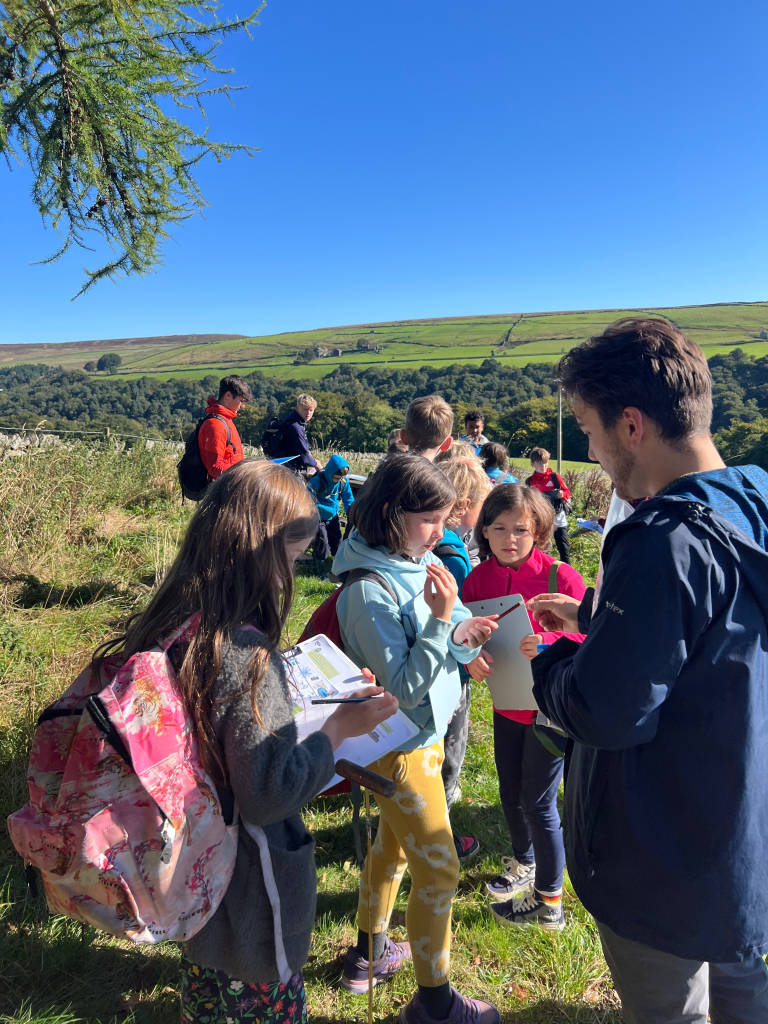
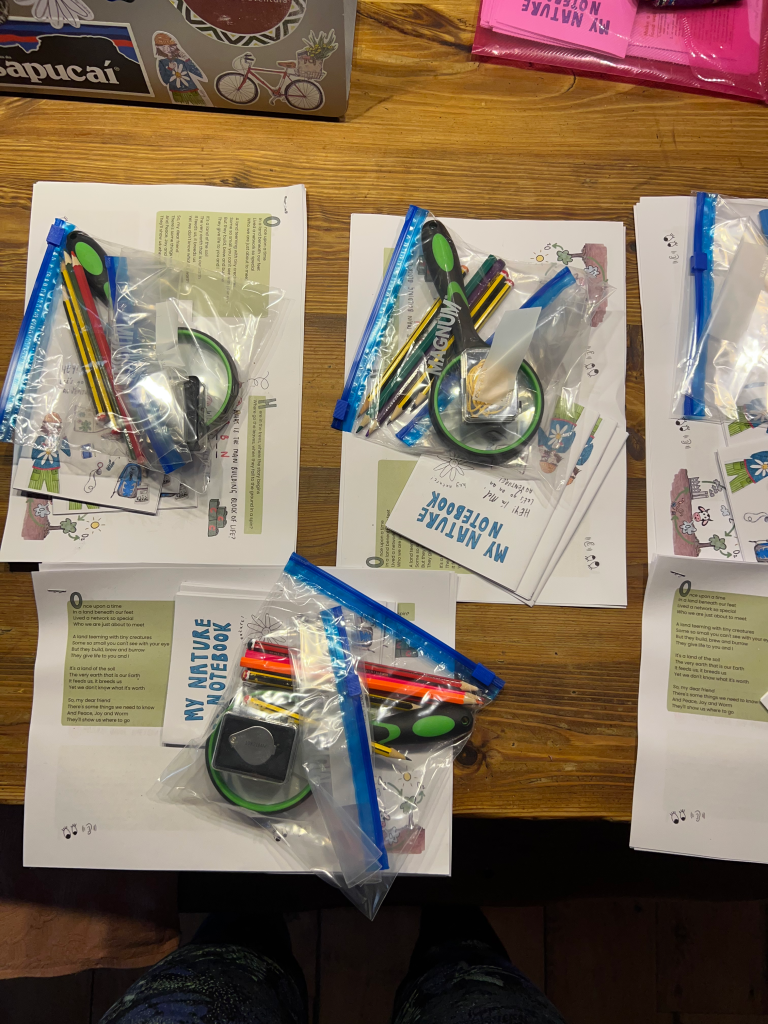
The nature walk was followed up with a creative science session, with the Cubs looking at sphagnum moss and soil samples, and creating artwork and illustrations inspired by the moorland plant community.
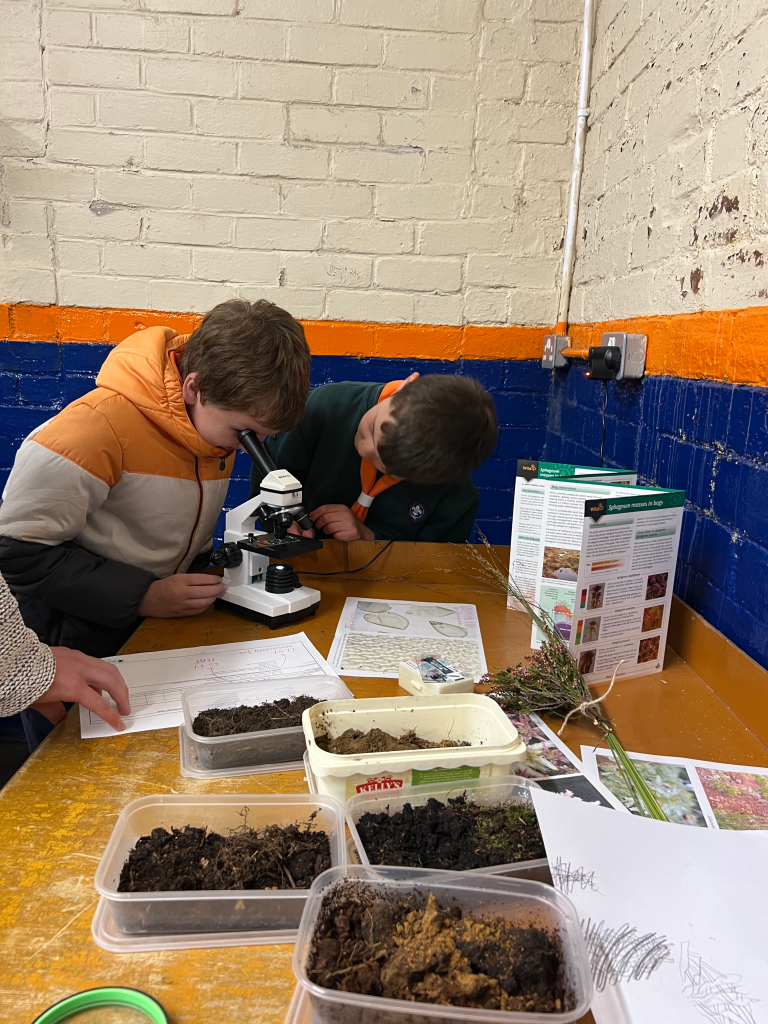
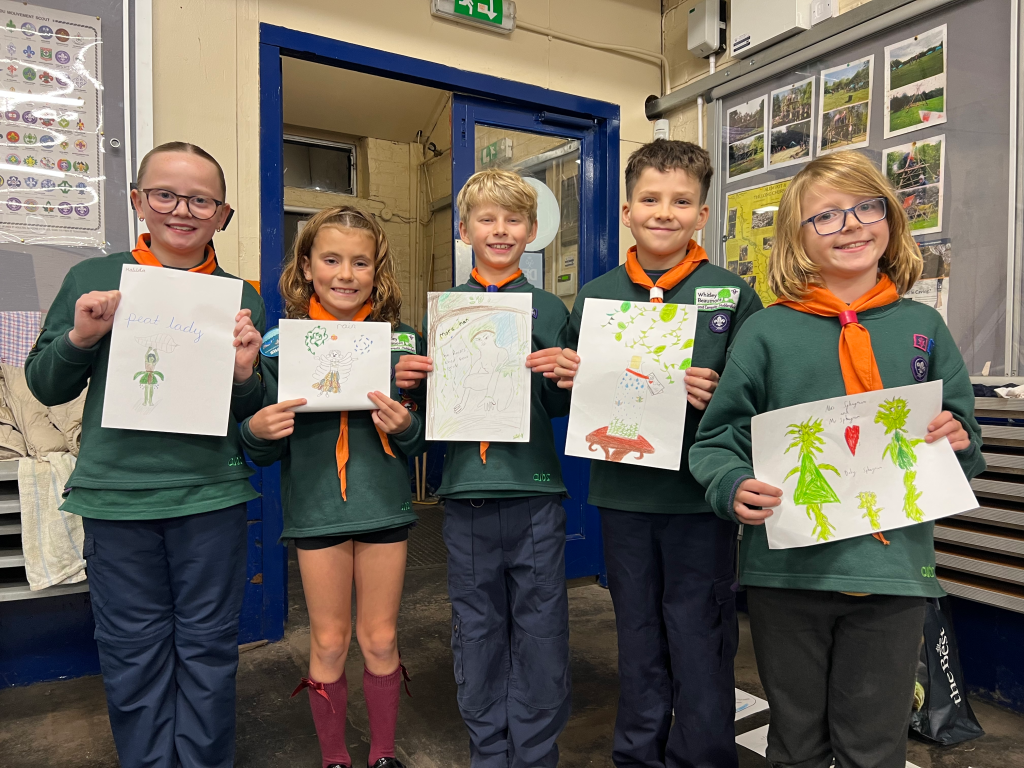
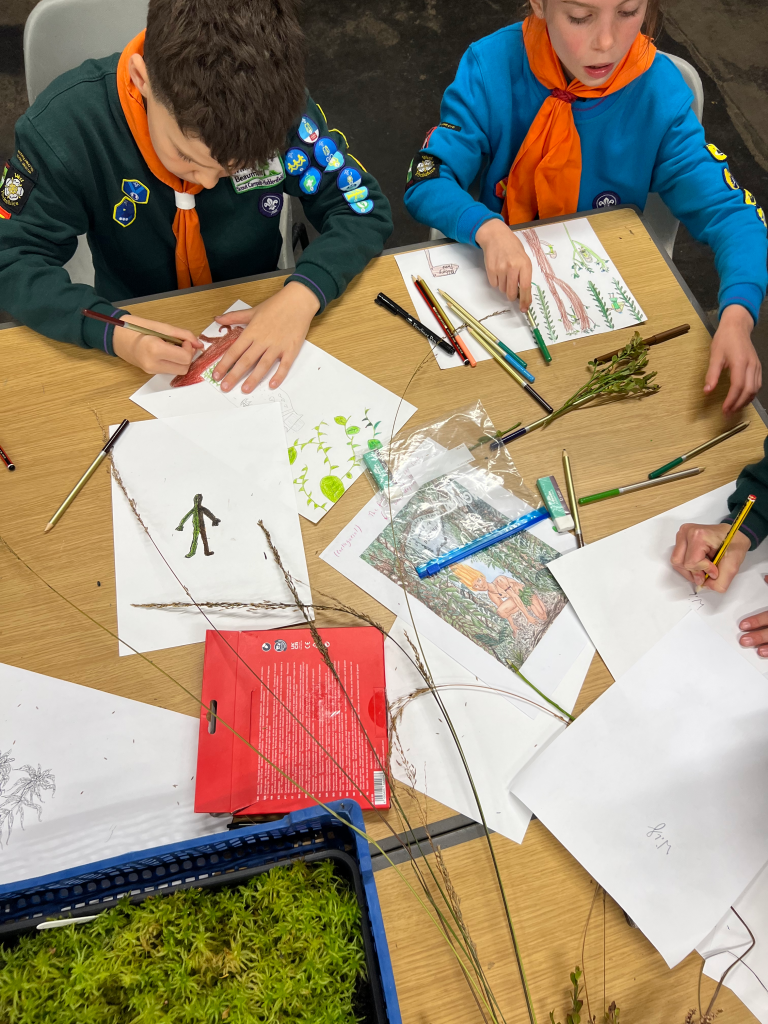
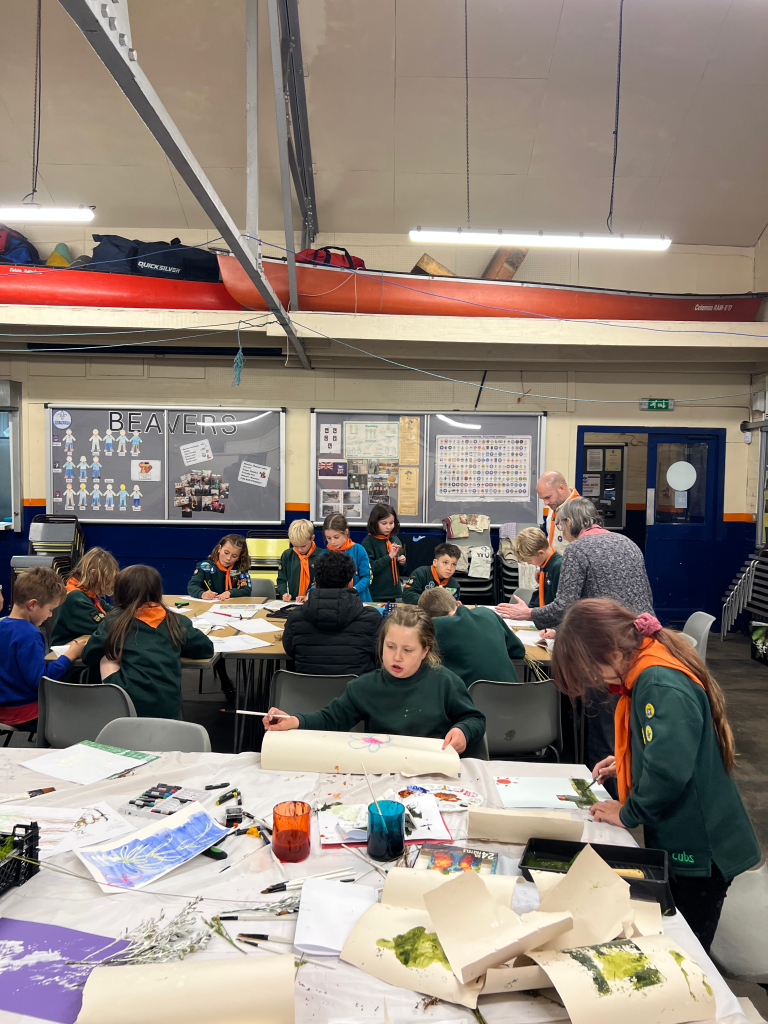
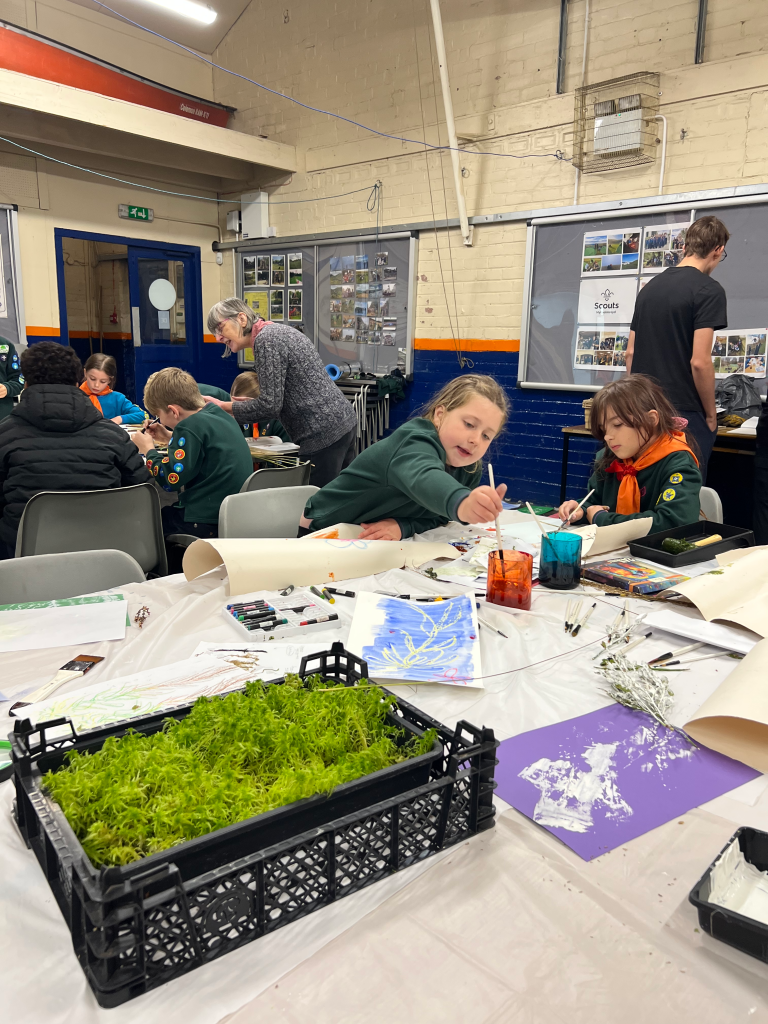
21 Cubs attended the nature walk and 20 attended the follow up workshop.
Map-making
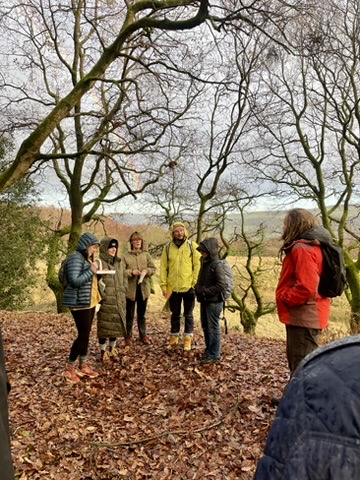
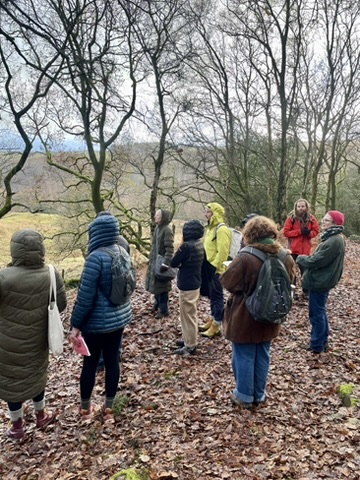
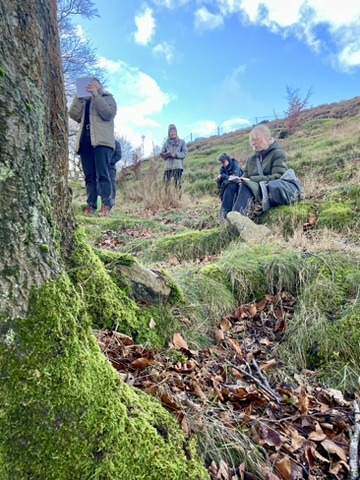
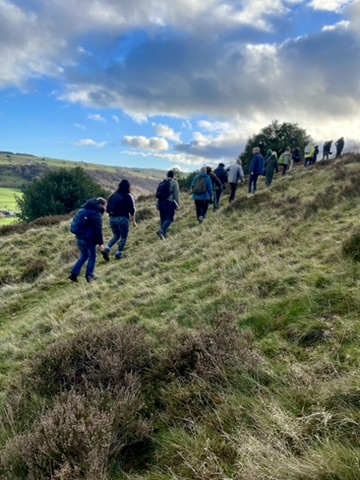
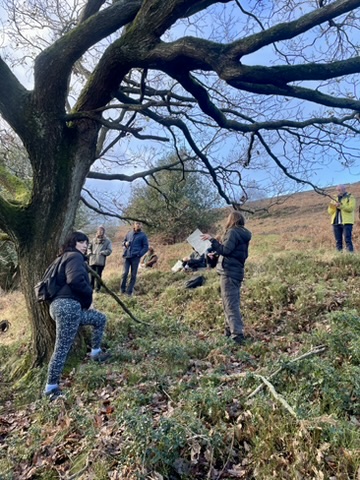
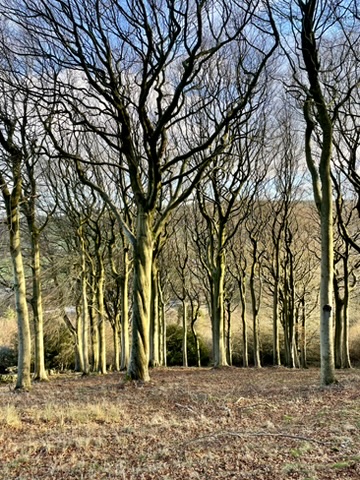
We held two map-making walks with cartographer Christopher Goddard. Chris has recently published a map of The Calderdale Way, which is currently the only map of it in print, so we were keen to involve Chris in the project. The map making sessions were open to the general public. They consisted of a walk through Broadhead Clough Nature Reserve, with various creative drawing and writing activities which broadened participants’ ideas of what a map can be.
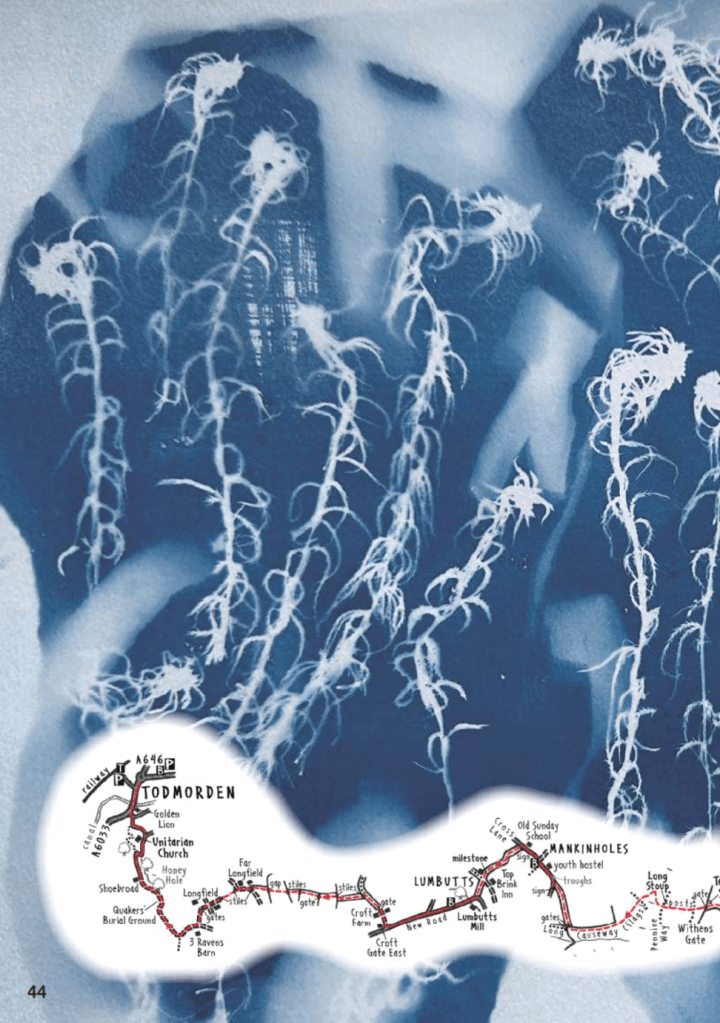
Originally, one of the sessions had been planned to be held for the local Explorers (14-18 year olds) group but unfortunately take-up was very low so that was cancelled and replanned as a public event. Participants were asked to share what they created in the sessions, and some of these will be published in the zine alongside interactive map-making prompts for readers. Chris created a map of the PeatZine trail, and a short essay on map making with creative prompts, both of which are included in the zine.
These events were very popular, with tickets completely booked up a few days after they launched. In total, 35 people participated across the two events. Twenty people were booked onto the first walk but poor weather meant that 15 attended; 20 people attended the second walk.



Exhibition and zine making workshop
At the end of November 2025 we held a two-day pop-up exhibition in Mytholmroyd, which displayed work created by participants in the workshops, along with creative work from the project team itself. This was held at The Local Motive, at the old railway station building in Mytholmroyd, and was open to the general public.
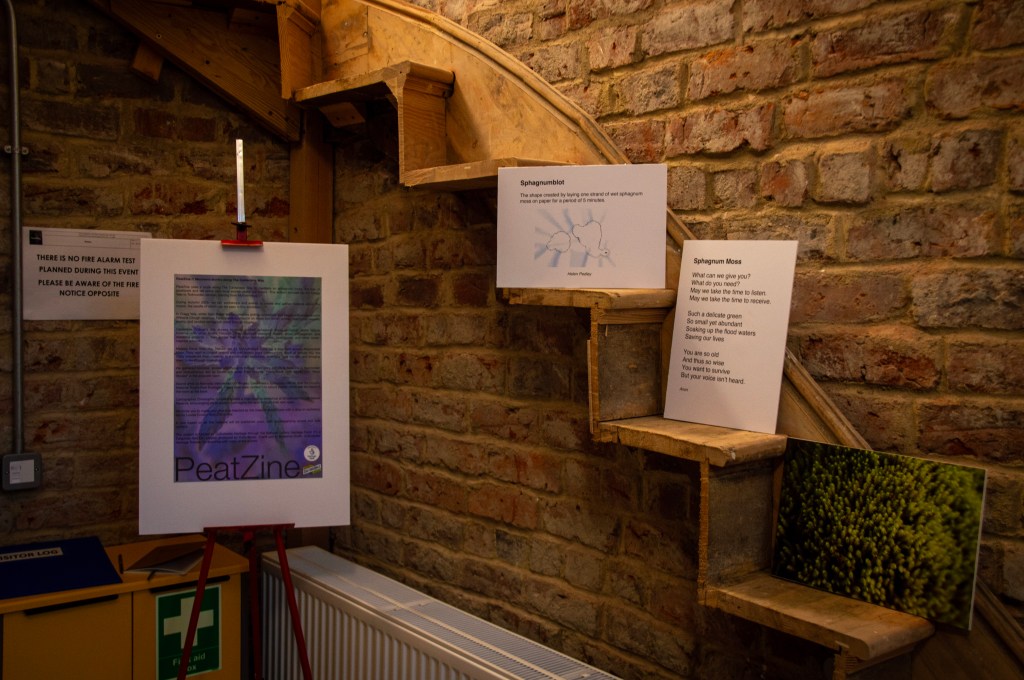
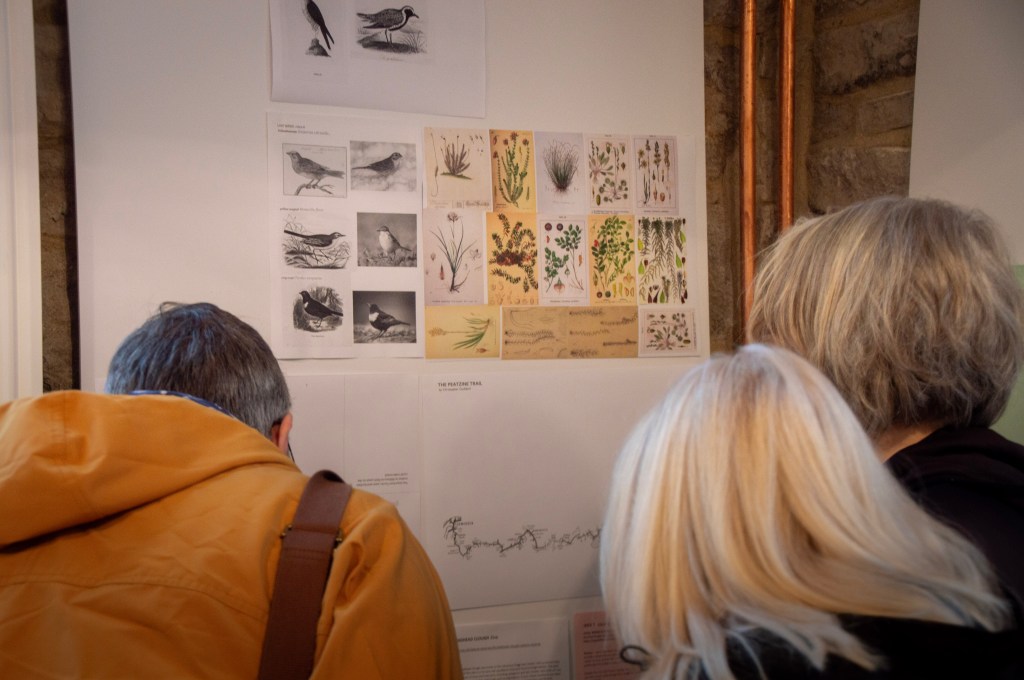
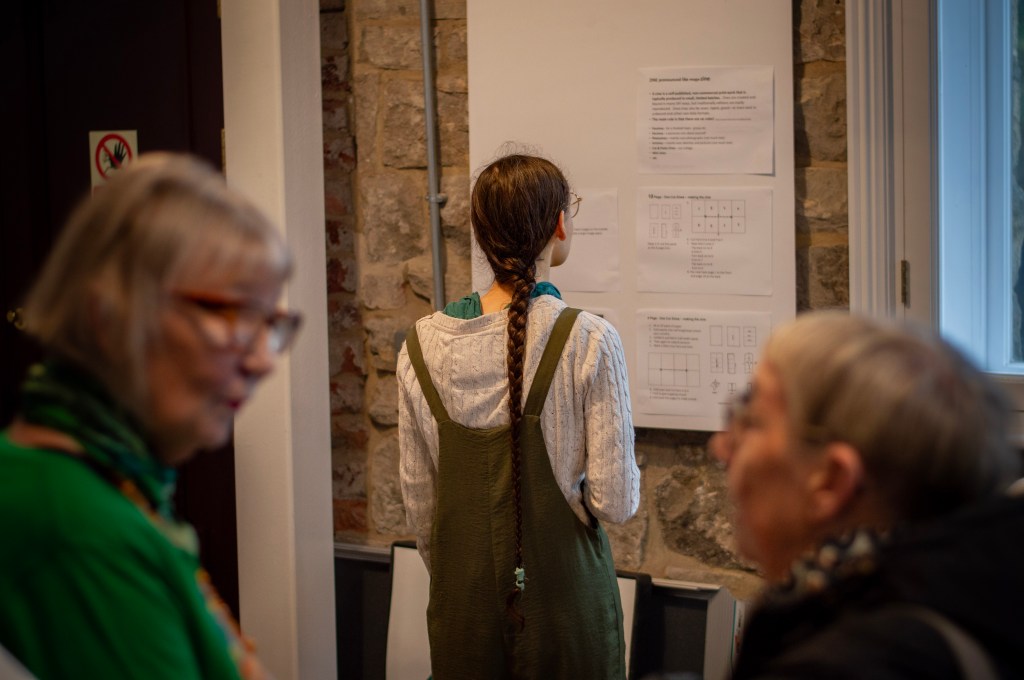
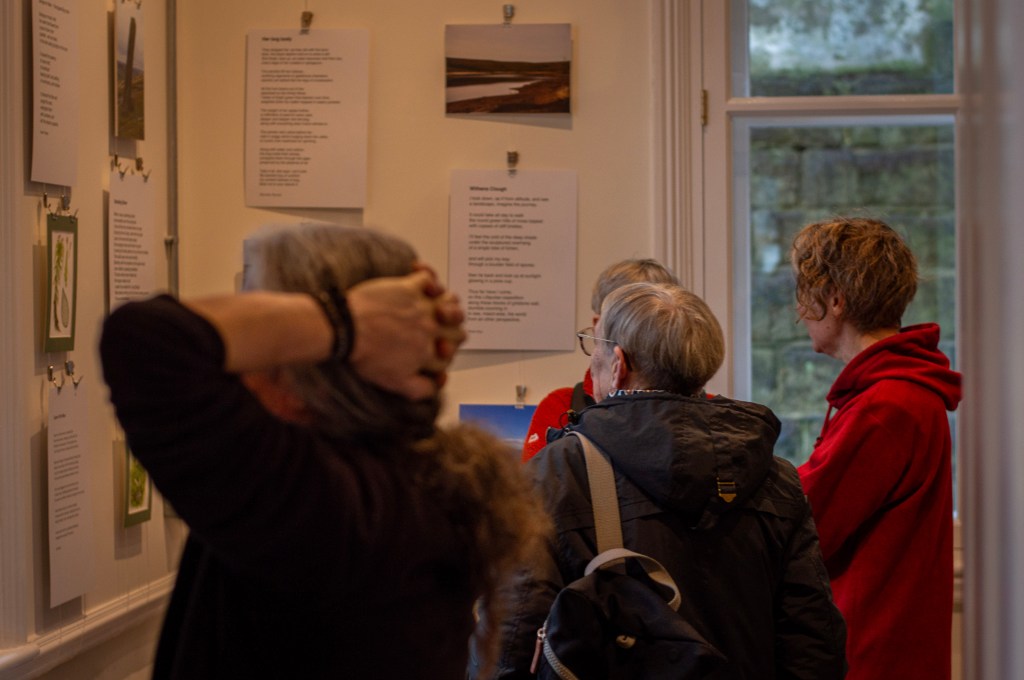
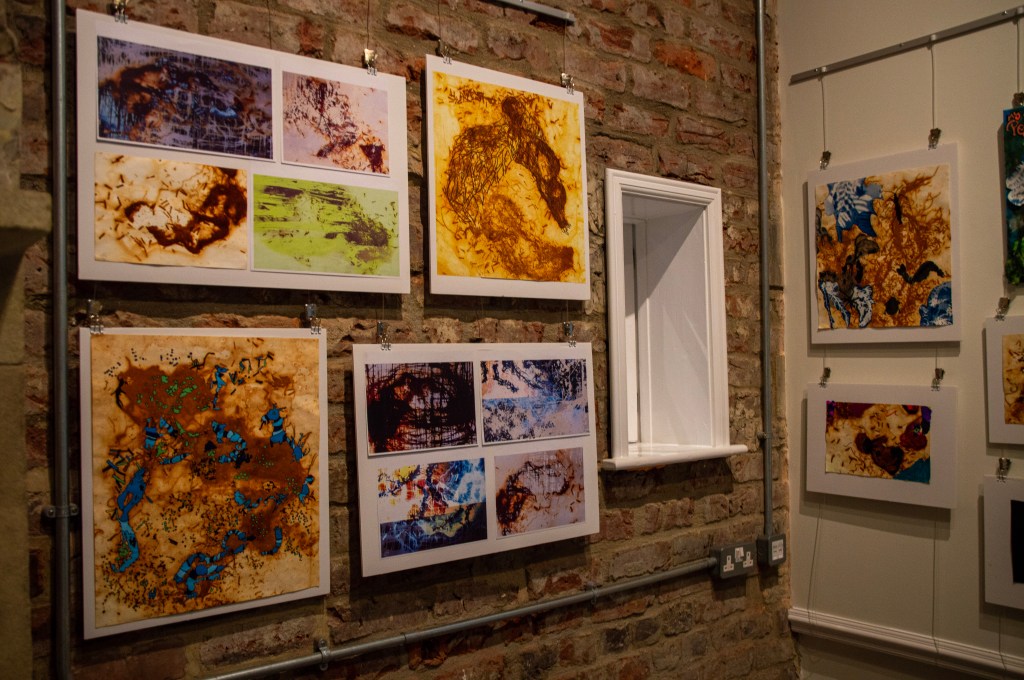
During the exhibition there was a drop-in zine making workshop led by zine and comic book maker Louise Crosby. Participants were invited to respond to the exhibition, and given the choice of 10 different zine making activities which were based on the themes of the PeatZine project.
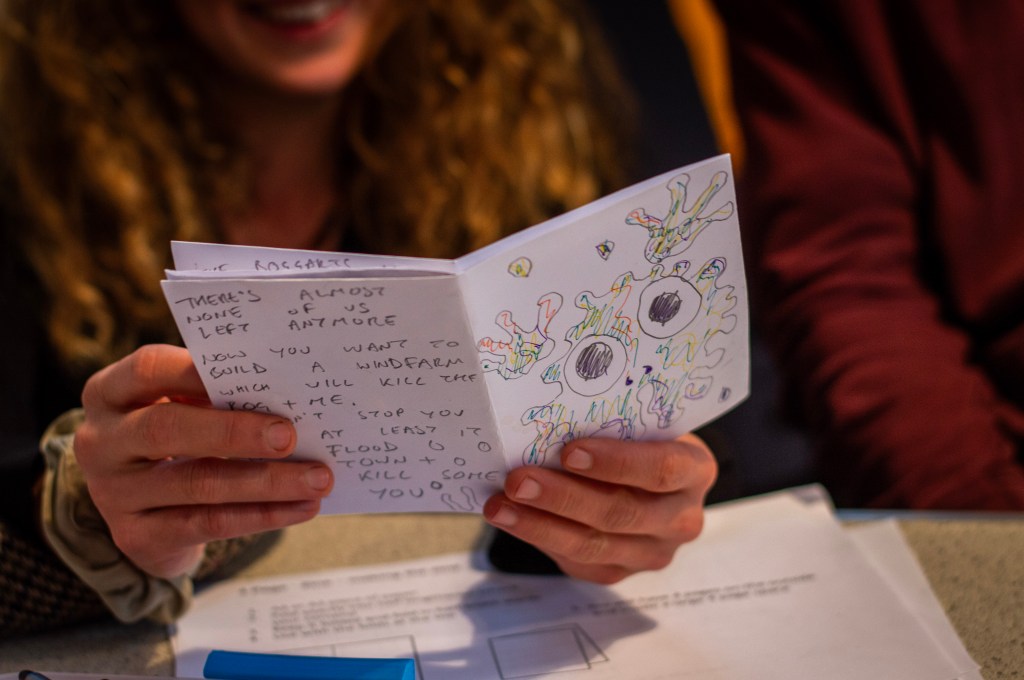
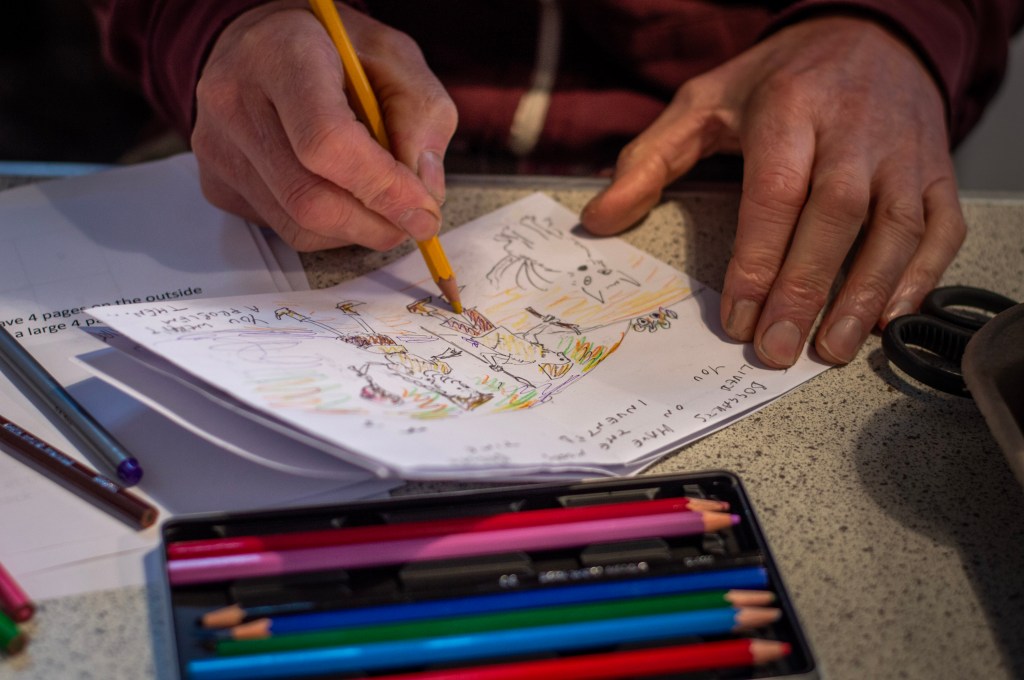
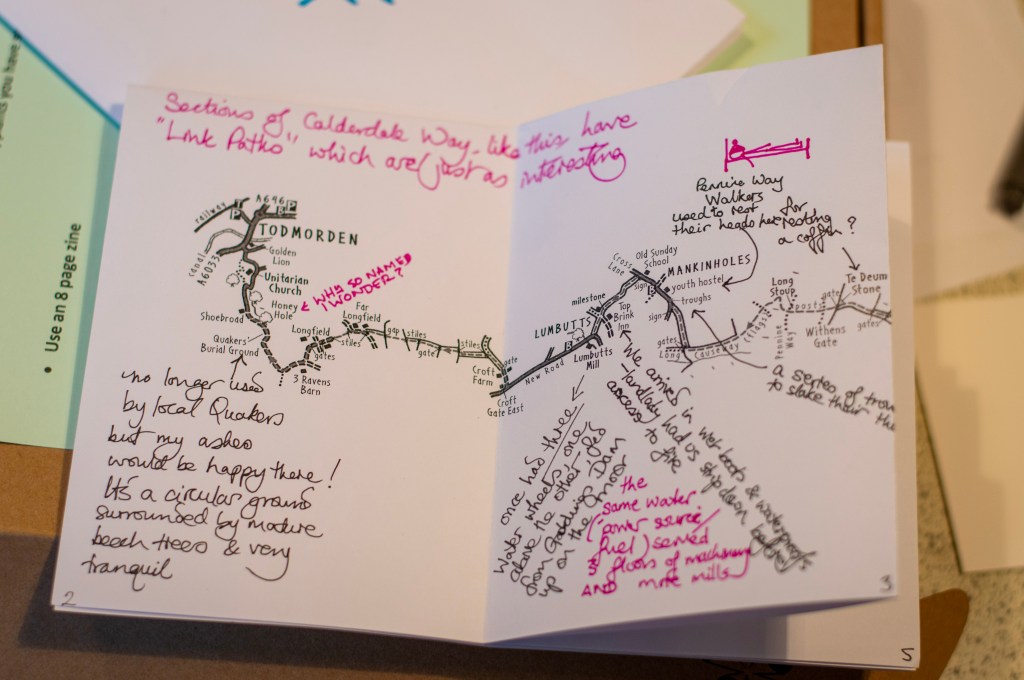
Over the course of the weekend we estimate that 200 people visited the exhibition. Approximately 40 people sat down to make a zine.
PeatZine – the final output
The zine was curated by Katie Bates, the creative producer, and designed by Louise Crosby. It is a 44 page booklet, with a pullout A3 map of the PeatZine trail with interactive prompts, and the Nature Notebook aimed at children. The zine is composed of
- Paul Knights’ “Moor Stories” writing
- poems created in the creative writing workshops
- illustrations from the Cubs
- visual artwork created by Calderdale College students
- photos from the National Trust, Calderdale Sphagnum Moss Project and workshop participants
- A section on map-making by Christopher Goddard, with examples from participants from the map-making sessions
- artwork from the creative team
The zine also includes QR links to sound clips, which are hosted on Jo Kennedy’s website.
It also includes a link to a longer piece of writing by Paul Knights, available on his website. This was based on the interviews and stories collected at the heritage days, along with prior research on the Langfield Common area that Paul has undertaken for many years.
Stakeholders
We worked closely with Culturedale Heritage and the Visit Calderdale team in the design and delivery of the project, and with Calderdale Council’s Sphagnum Moss Project.
Most of the project team are part of the Peat Appreciation Society, an arts centred collective which aims to celebrate and raise awareness of peat.
Turquoise Arts CIC managed the project.
Co-creation
The initial idea for the zine emerged from a conversation with Gill Wrigley, Calderdale’s Sphagnum Project Officer at a learning session for members of the Peat Appreciation Society. Gill was asked what message she thinks is most important for people to understand; her answer was for the community to understand the human-driven changes on the moors over the last two centuries, why certain decisions were made with the environmental and scientific knowledge that people possessed. We agreed that creating mutual understanding of this contested space is really important and that has become a major inspiration for this project.
From the beginning we took a very open approach: we knew that we’d run a variety of workshops based on each creative practitioners’ specialities and create some kind of zine as the culmination, but we did not try to overly shape what the end result would be during this process. This meant that each creative practitioner had the autonomy to craft their sessions around the community / target audience.
The final zine was therefore entirely dependent on what people who attended our workshops and events responded with. Everybody who attended a creative session and contributed their responses is featured in the printed zine.
The “story gathering” sessions were particularly important for capturing the breadth of intangible heritage in this landscape – for understanding the stakeholders in this landscape, the users of it, the connections and human stories it holds. A key theme which emerged was how conservation and custodianship is understood differently, yet there is a common and uniting thread of caring deeply about the landscape and its ecology. We were very lucky to have a wide range of people attending the sessions: local historians and members of heritage groups, someone with a long family association with reservoirs, local farmers and people who grew up on moorland farms, walkers, naturalists, people who have lived on the moors for a long time, others who have been drawn to them more recently.
Funders
The project received £10,900 from the National Lottery Heritage Fund, via Culturedale Heritage.
All events were free of charge. The booking page for the map making and creative writing walks had the option to add a donation when booking the ticket. Donations amounted to £125 and were reinvested back into the project.
Budget
85% of the budget was spent on paying the creative team; 15% was spent on delivery which includes some organisational overheads, printing, exhibition preparation and room hire.
Impact
Participant experience
Creative writing
10 out of 11 participants responded to our feedback form. Three out of these ten people had never attended a creative writing workshop before, so it was a new experience for them.
Though it was difficult to fill the spaces on this workshop, those who attended reported rich and meaningful experiences of it. Having a smaller, intimate group also contributed to this quality experience.
The following themes emerged from the feedback forms.
Environmental knowledge
Participants reported improved understanding of sphagnum moss and peat: “I learned about the wonders of Sphagnum moss and took some photos to help me identify it in the future.”; “I improved my understanding of the biology of sphagnum moss and the process of peat creation. I also gained a better understanding of how peat stores carbon.”
Participants commented on how they enjoyed being able to get up close with the sphagnum moss which had been specially grown and used for this event, with loupes provided to look in greater detail: “I loved looking at the moss with the lens and incorporating what I saw into a poem.”
Others were pleased and felt inspired by learning about Calderdale Council’s sphagnum growing project; “To know that volunteers are growing sphagnum at home to help repopulate the damaged and eroding peat”
Mindfulness
Participants said they noticed more than would have done normally, and became more observant: “I loved the long slow stroll across the reservoir dam wall looking at the tiniest plants.”
Participants commented on an altered relationship with the landscape: “I also really enjoyed the chance to connect with the landscape up at Withens Clough in a different way.”
Confidence
Participants reported feeling confident to partake: “I was surprised how confident I felt in the group as I had never been to something like this before”. Another commented that feeling confident in the group session allowed them to become absorbed in discussions and writing.
Although most participants did not know each other, another participant reported feeling confident in trying out new ideas amongst other creative people: “being given a specific topic focussed the mind and then participating with other creative people helped confidence in trying out new ideas”. This may have been aided by the smaller, self-selecting nature of the group.
Wellbeing
Participants reported a number of ways in which the session improved their wellbeing, through finding a new outlet for emotional processing and having a calming time in the company of others:
“It’s helped me to find a way to process and express feelings in a new way, while linking these to metaphors and processes in the local landscape.”
“The deep concentration engendered by quietly writing with others calmed the noise that makes it difficult to, let my inner eye open and just write what it reveals.”
“The walk was great for my well being which is suffering due to stress at the moment. Sometimes, for very complex reasons I find it hard to go out alone. At Withens with Sally and the lovely people attending the workshop I felt all my difficulties melting into insignificance against the landscape around us.”
Creativity
The sessions also helped people develop their creativity and creative projects. One participant noted a renewed interest in language, while another noted that they’d never written a poem before (and then submitted one to our project which was displayed in the exhibition and printed in the zine). Another commented “I am writing a novel in which a bog plays an important role. From this session I learned a lot about moss which have opened up new creative paths for me.”
Quality of the session
Finally, many participants commented on how well the workshop was run:
“The care and attention of how the event was designed and run by the facilitator. It felt like a safe space to share my creations, although it’s not a medium i’m accustomed to working in.”
“The wonderful tutor, Sally so kind enthusiastic and encouraging, the inspiring examples of writing she brought to help us get into a creative frame of mind. The workshop was well structured.”
“The tutor was approachable and enthusiastic making it easy to become absorbed in the discussions and writing.”
Heritage events
We sent feedback forms to participants but unfortunately only received one response. This might be due to the demographic, or the fact that the event was not a workshop so much as a meeting where feedback forms might not typically be completed.
However, our sense is that participants appreciated these events. Many stayed around for the whole time, whilst others contacted Paul (the main organiser) after the events to give more information, and others attended the pop-up exhibition. The project team felt this was a rich and productive way to collect information and oral histories from local residents.
Map Making
As this was an outdoor event with difficult weather conditions, we did not collect paper feedback forms, instead sending out a survey after the event. Unfortunately the response rate was quite poor (6/40 – 15%) but we did receive useful comments from those that did respond.
Thinking about the landscape in a different way
All respondents felt that the walk had helped them to think differently about the landscape around them.
“It really made me reconsider what I think of as being important when walking through an environment, and how that is highly subjective.”
“ i have been thinking about it on walks since in terms of looking at where i am/ the history/ the trees/ sounds/ smells”
Many of the responses point to a more mindful experience in the landscape:
“it encouraged me to slow down, notice details, and look at familiar spaces in a fresh way.”
“It slowed me down, made me more conscious of my surroundings and how i was perceiving the wider landscape rather than what was directly in front of me. i tend to zoom in rather than see the bigger picture so i enjoyed mapping out the wider landscape and thinking how might do that…”
“it inspired me to engage more senses when out walking.”
Creativity and learning
Participants valued trying out new approaches, which turned out to be deeply creative:
“loved the mapping of senses”
“Opened my eyes to non traditional ways of cartography”
“it inspired me to try something different”
“[Enjoyed] creating a smell map through the woodland. I wrote a poem, something I haven’t done since school.”
Social benefits
Participants enjoyed meeting each other during the walk and sharing creative ideas:
“It was a great bunch of people, I just wish I had been more proactive of exchanging details with everyone afterwards. Due to the rain everyone scattered very quickly after it ended”
“Being outdoors, sketching freely, and sharing ideas with others in a relaxed atmosphere.”
“also really enjoyed others perspectives when we made sound/ smell/ texture maps, was a great way to connect w strangers doing a shared activity for fun.”
Session led well
Many participants commented on how well the session was designed and run:
“I liked the mix of being set small tasks but the session also being self-led, it made it easy to interpret the landscape in my own style.”
“ I was slightly expecting it to be more focused on Chris’ style of map making, but it wasn’t and focused more on the creative process which was a really pleasant surprise. I wouldn’t change anything.”
“I really enjoyed it and found it really useful. It was a great workshop with Christopher and his knowledge and enthusiasm for the outdoors/ maps really showed. Thank you.”
The tickets for the session sold out quickly and received a lot of social media interest. This would be a great session to develop for future projects because it was popular and seemed to attract a variety of people.
“It was fun. I’d like to do something similar / advanced in the future if you do that?”
Art-Science activities with Mytholmroyd Cubs
Twenty-four Cubs (aged 8-11) and 4 cub leaders completed paper feedback forms which were specially designed for this younger aged cohort.
The average enjoyment rating for the moorland walk and workshop was 4 out of 5.
The Cubs said that they enjoyed:
- finding wildlife on the walk – frogs, plants, fungi, and even a “bunny eared sheep”
- the activities during the workshop, such as Top Trumps and drawing
- using the microscope to draw moss
- the experience of the walk in itself including its beauty
The Cubs reported that they’d learned about the importance of peat and its formation, sphagnum moss and other moorland plants such as heather.
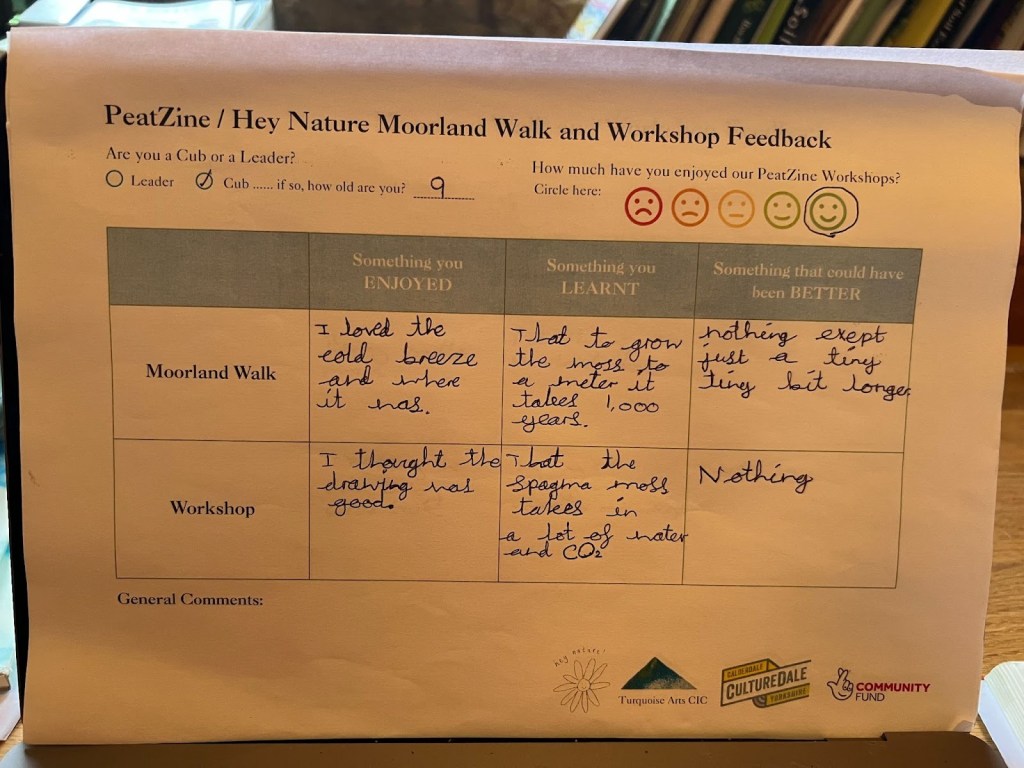
The Cub Leaders commented that the group enjoyed the walk, listening to poems, painting and drawing, finding different creatures and copying and creating stories. They enjoyed “watching the Cubs being creative” and “it was something very different for them so it was good to see them asking questions”. Melissa designed the two sessions in such a way that they delivered a rich variety of activities, so it was “something for everyone”.
Ogden Water learning day and creative workshop – Calderdale College
10 people attended the Ogden Water day and the creative workshop. Seven people completed feedback forms.
Six out of seven of the respondents had never attended an environmentally themed workshop before.
Most of the respondents commented on how they found the workshops interesting:
“I found it extremely interesting. I loved the idea of studying the moss and then planting them up on the moorland. I felt that I had made a small contribution to the improvement of the landscape.”
Participants appreciated the combination of nature-based and art activities:
“I thought it was really interesting. The workshop was delivered really well and I love adding nature and artwork together.”
When we asked participants whether the events had any personal impact on them, almost all responded that it had improved their knowledge about the local environment:
“I have lived in the local area for years and the project gave me a deep understanding of the importance of moss in the landscape. I will look out for how the moorland has changed from now on.”
“I found it useful to learn more about the local environment for me and in general as it will lead to a better relationship between people and the environment.”
Participants also commented that they enjoyed working with other people, planting moss and being in a creative group.
When asked about the most enjoyable aspects of the workshops, most participants pointed out how they enjoyed learning new techniques (e.g. cyanotypes and rust printing). Others also commented that they enjoyed
- working with other people and being in a creative group
- planting moss and looking at it through a microscope
- Learning about moorland vegetation and moss
As we found with the creative writing walks and Cubs group, a nature-based walk/ workshop with a follow up session of creative activities was a productive combination for participants.
Finally, four of the seven respondents offered further comments in the “any other comments” section. Sheila, the artist-facilitator from the PeatZine team was given particularly positive feedback:
“I thoroughly enjoyed every aspect of the course. Every person involved with the management of the day was extremely helpful and knowledgeable. The artist sessions were great.”
“I think it was so kind of sheila to help us and take an interest in our work. Very grateful thank you very much. Thank you for letting us know about moss and peat, and taking us on a walk up to the moor.”
“Nice and kind staff. Enjoyed the experience.”
“Sheila was an excellent facilitator. She was very indulgent and understanding with a disparate group of people. The results were excellent.” (tutor)
The students clearly appreciated interacting with a local practicing artist with environmental expertise.
Exhibition and zine workshop
Exhibition visitors were encouraged to leave comments in a comments book. Fourteen people left comments along with 2 comments on social media. People commented on enjoying the zine making workshop, the content of the exhibition and seeing it in the beautifully renovated, newly opened community space at the old railway station building in Mytholmroyd.
“How delightful to see this building restored and reopened! The mossy and peaty themed art work and poetry is inspiring me to do a bit of my own and to get up onto our marvellous moors to admire the sphagnum species, hear the birds, squelch along, view the views.”
“A very interesting exhibition steeped in our local heritage and folklore.”
All the comments are transcribed in the annex section.
Artist-facilitator experience
The project was structured in such a way that each artist-facilitator was given creative responsibility for their ‘workstream’ and their own budget to manage. The project team were also heavily involved in shaping the project’s creative vision and thematic focus. This was partly for practical reasons: the creative producer / project manager was caring for a terminally ill relative during the course of the project and needed to be able to step back without the project stopping. Moreover, this non-hierarchical approach felt like the most appropriate way to get the best out of this talented, experienced and creatively diverse team.
The core project team met at different stages during the project, and also developed ‘horizontal links’ with each other by collaborating and supporting each other on their respective workstreams.
Developing methodological practice
Most of the creative team had experience as artist-facilitators. However, the experimental nature of the project, and the creative autonomy given to the project team allowed the team to trial new techniques, which will undoubtedly be fed back into the cultural ecosystem of Calderdale in future.
Paul Knights commented:
“For me, the project definitely had a professional impact. The heritage gathering drop-in was a brand new concept, something I had never done before. It was the freedom [Katie] gave us in deciding how to contribute that gave me the confidence to try it out. I think it worked very well; we gathered lots of material, people seemed to value being able to contribute, it created new connections between myself and the attendees that I didn’t already know, and also between the attendees who didn’t know each other. I can now use it as a template for future heritage and history projects.”
Supporting emerging creative practitioners
As the team had a high level of professional experience, we were able to support Melissa Davie, who is an emerging artist-facilitor. Melissa intends to establish a science-nature-arts education business for young people. This gave Melissa a valuable opportunity to gain experience in putting together a creative brief and budget for workshops, developing her stakeholder management and facilitation skills, and having her work showcased. In her words:
“This project was an opportunity to try something that I’d been wanting to do for a
long time. It was something new for me, particularly facilitating such a large group on
my own, so I had to step out of my comfort zone, and I did find it challenging. But I
was surrounded by supportive people, both within the PeatZine group and the Cub
Leaders, so I felt that it was a safe space to do so.
I was encouraged by the positive feedback I got from the Cub group; how much they enjoyed getting out on the moors, that they had learnt about peat and the plant community, and their creative expression and brilliant imaginations in the workshop. It helped me develop an understanding of the process involved in running creative workshops / leading trails and test out whether it is something I’d like to continue doing in the future.
I particularly enjoyed creating my illustrations and the exhibition, helping set up and
invigilating. It was brilliant to see so many visitors, engage with the public to explain
the project and communicate our message.
I also really enjoyed the research process and learning more about peatland processes and Sphagnum (supported by my experience with the Calderdale Sphagnum Project and the Peat Appreciation Society), then translating that into an accessible format for the target audience.
I am grateful for the opportunity to be part of the PeatZine project, to collaborate with
other like-minded creatives in the valley, and to contribute to spreading awareness
about the importance of peatlands.”
PeatZine also benefited from the assistance of one of Culturedale’s Heritage Trainees. Rowanne had previously expressed an interest in developing heritage walks based around environmental themes, so the project seemed like a good fit for her to develop what she’d learned on the training scheme. Rowanne’s initial input into the project and her assistance at the creative writing walks, map making workshops, heritage story gathering sessions and the pop up exhibition was invaluable. Rowanne commented:
“The PeatZine project encouraged me to consider the landscape at a much smaller scale than I had ever thought about it before, in terms of the plants growing on the sides of paths and the individual human connections to place. As an interdisciplinary project, I was able to undertake learning from fields I had not engaged with since high school, namely science and creative writing.”
Partnership development
The PeatZine project knitted together several organisations and initiatives.
The project linked and celebrated programmes delivered by the local authority:
- The Calderdale Way (Visit Calderdale team)
- Culturedale Heritage
- The Sphagnum Moss Project, which was part of the Growing Resilience Partnership
Sheila used her links with Calderdale College (from being artist-in-residence for the Sphagnum Moss Project) to organise and deliver the workshops for this group.
The artist-facilitator team also developed stronger links with:
- National Trust peatland restoration team
- Community Rail Partnership
- Mytholmroyd Cubs
- Heritage groups and local historians
- The WaterLANDS project, based at the University of Leeds
The pop-up exhibition and workshop was the first public event held at the newly restored community and arts space, The Local Motive. This was mutually beneficial for PeatZine and The Local Motive. Some visitors were motivated by seeing the building in its restored state (it’s been closed to the public for over 3 decades) so PeatZine potentially had a more varied audience than it might have had in another venue. The building worked very well as a venue for this particular project as it was a beautiful and intimate space.
The exhibition acted as a publicity event for The Local Motive, showcasing how it could be used as an exhibition and workshop venue. As Katie had been a Trustee of the charity that runs the building and retains a close relationship with the Trustee team, the exhibition served as a ‘soft launch’. Also, Turquoise Arts donated some display materials to The Local Motive, which can be used for future exhibition events.
This in turn has strengthened links between Culturedale and The Local Motive, as the latter will be hosting a further project supported by Culturedale Heritage in 2026.
The exhibition materials are now stored at the Culturedale Hub in Halifax, for use in future exhibitions.
Reflections
This was an experimental project in the sense that it took a very open approach to the notion of heritage: it drew together tangible and intangible heritage, local history and oral histories, and environmental heritage. At the same time it invited creative responses and engaged with scientific topics linked to the landscape.
A co-created zine-walk with so many creative and heritage elements is an innovative project. Though experimental in form and therefore sometimes difficult to explain succinctly, it seems to resonate with people in the local community because it’s so rooted with local experience and concerns. Exhibition visitors said things like “we need more things like this” to the project team, and as someone commented in the visitors book: “I love the artwork, the words, the kids’ contributions…all of it. We need more things like this! And to notice what is around us… and under our feet… how healthy!”
A great variety of local residents from different walks of life contributed to this project – from local children, mature arts-access students, people with varied and deep connections to the moors, to local residents who took part in the creative workshops.
In total:
- 9 creative practitioners were involved
- 145 people took part in a creative workshop or event
- 200 people visited the pop-up exhibition
- 152 accounts follow the @peatzine Instagram account (as of 10/02/26)
- The initial print run for the zine will be 500 copies, with distribution planned in outlets across Calderdale. Further print runs can be organised depending on demand.
The major themes that emerged from people’s feedback are:
- Seeing the landscape differently and having a different experience of it
- Improved environmental knowledge relating to the moors, sphagnum moss and peat creation
- Mindfulness and wellbeing benefits from taking part in a creative session
- A sense of connection with other participants and confidence in being part of a creative group
- An expansion of creative skills, through learning new techniques or being inspired by the workshop content
As people read Peatzine, walk the PeatZine trail and interact with the creative prompts, we hope that these benefits will be felt by an even larger group of people.
Knitting together a tangible environmental topic with creative responses has once again proved to be a popular, accessible and meaningful approach, as with the Ancient Underlands project (Turquoise Arts’ previous project which drew attention to and celebrated Calderdale’s ancient grassland habitat and the fungi species it supports). Engaging with heritage themes widened the audience for PeatZine even further.
As the final output – PeatZine – is printed and made available publicly, we hope that it will encourage even more people to engage with their local heritage and environment. There are many ways people can engage: doing the walk, reading the zine, listening to the sound clips, reading the indepth heritage piece written by Paul Knights, filling out the Nature Notebook (aimed at children) and participating in the creative prompts in the pullout map which accompanies the zine.
Future possibilities
The team would like to develop aspects of the project if further funding becomes available.
- We would like to develop more editions of PeatZine, using other sections of the Calderdale Way to explore the landscape’s moorland heritage and environment. For example, Old Town to Midgley (or Wainstalls), taking in Midgley Moor (and Saltonstall Moor), and also the Todmorden to Blackshaw Head section (taking in the Bride Stones and Staups Moor).
- We would like to develop a geolocated soundwalk which captures some of the intangible heritage of the moors. It would revisit some of the interviewees from the heritage gathering sessions to tell their stories, and knit this together with some light historical narration and the educational sound pieces made for PeatZine. It supports the aim of bringing new audiences into heritage, and will also preserve some local oral histories when these are fading. It would be freely available and digital so there’s no cap on the potential number of participants.
- All the workshops were well received, and all of the artist-facilitators would like to run similar future workshops which build on the initial work done in this project and the feedback received.
Annex
Exhibition comments book
- How delightful to see this building restored and reopened! The mossy and peaty themed art work and poetry is inspiring me to do a bit of my own and to get up onto our marvellous moors to admire the sphagnum species, hear the birds, squelch along, view the views.
- Very informative and enjoyable display
- Wonderful event – beautiful building. Well done everyone.
- What a wonderful project! The whole building is beautiful, and then the sublime, respectful, noticing energy of the exhibit… brings an elevation of purpose, of sense, of heart… that (i think) gifts all of our Mytholmroyd with something sacred and special!
It was a joy to be included in the project – walking out at Withens Clough, writing – because, again, of noticing – that most quiet, essential activity that we so often neglect. Part of ‘slow living’, that we need so badly in our screenful lives.
I love the artwork, the words, the kids’ contributions…all of it. We need more things like this! And to notice what is around us… and under our feet… how healthy!
- Really great “event” with lots of good stuff. I liked the zine workshop very much. The building looks great too! Lots of great rooms, as well as the staircase etc.
- Moss is great. Keep up the good work 🙂
- I really enjoyed learning about the moors and creating a zine! Thanks for putting on the event 🙂
- Beautiful evocative exhibition in a wonderful space. Enjoyed the zine making.
- An interesting change from my usual Saturday. Had fun and learned a little.
- I travelled all the way from Todmorden for this! It was very good! 🙂
- A very interesting exhibition steeped in our local heritage and folklore.
- Lovely to see everyone’s work displayed in such a beautiful new exhibition space. It was great to be part of such a creative collaboration of artists, wordsmiths and storytellers in our local community.
- I’ve always wanted to see inside this building – so many have perished since the 70s. It’s heartening to see it put to such good use, not just full of computer activity.
- Very fascinating! Apolder [?] sort of like in the netherlands but on a smaller scale in terms of reclaiming lands, love the use of texture and marriage between biology and art – thought they were so different, turns out the same thing. Loved it, a perfect sunday treat for the eyes
Social media comments
- “Lovely to visit today. The building looks fantastic and it’s a wonderful exhibition! Well done to all involved!”
- “Excellent exhibition in a beautiful space.”
 Turquoise Arts